Candle filtration in lithium carbonate and lithium hydroxide production is often treated as a downstream afterthought, yet the purification and polishing stages are where battery-grade purity is actually won or lost. Demand for both compounds keeps climbing as EV and grid storage manufacturers scale up: current estimates put 2026 global lithium demand at roughly 2 million tonnes of lithium carbonate equivalent (LCE), with 2030 forecasts ranging from 3.7 to 4.6 million tonnes LCE depending on the source. Meeting that growth means squeezing more purity and more uptime out of every stage of the process. When solids carry through into ion exchange resin beds or reverse osmosis membranes downstream, the result is fouling, unplanned downtime, and resin replacement costs that rarely show up in the original process design.
What makes solid-liquid separation demanding in lithium carbonate and hydroxide production?
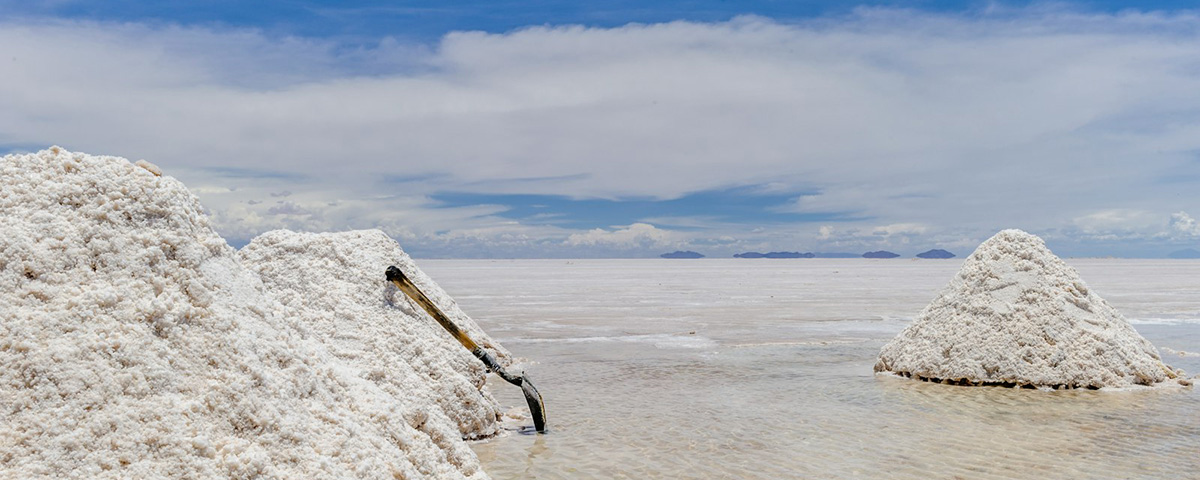
Both hard-rock spodumene conversion and brine evaporation routes to lithium carbonate and hydroxide carry high levels of magnesium, calcium, manganese, and zinc in the lithium sulfate solution feeding downstream purification. In brine operations, this liquor is corrosive and high-density, and equipment must handle continuous duty across a wide temperature range, from elevated geothermal sources to ambient high-altitude salar conditions. Left unremoved, these impurities do not just pass through, they precipitate downstream and foul the units built to extract and purify lithium, rather than the filtration step itself.
What filtration requirements protect ion exchange and reverse osmosis systems in lithium purification?
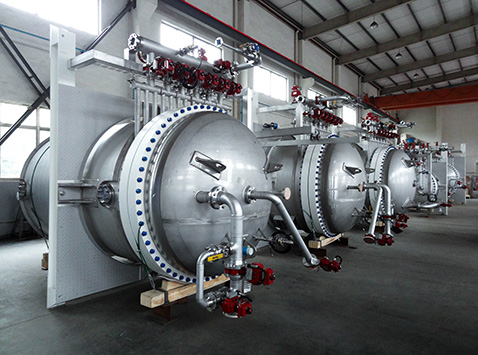
Ion exchange resin and reverse osmosis membranes downstream of lithium purification are highly sensitive to particulate carryover, and protecting them starts with the second-stage purification filter. After pH adjustment with soda ash and caustic soda precipitates magnesium, calcium, manganese, and zinc from the lithium sulfate solution, that slurry must be filtered before the filtrate reaches the ion exchange circuit. A properly sized candle filter removes more than 99.9% of solid particulate 1 micron and larger, which keeps these downstream units running as designed rather than being sized around chronic fouling. A second filtration step, bicarbonate polishing, removes unreacted solids after lithium carbonate is converted to soluble lithium bicarbonate with CO2, further improving product purity before bicarbonate decomposition and reducing the load returned to the leach circuit.
How do FUNDABAC® and CONTIBAC® address these purification and polishing steps?
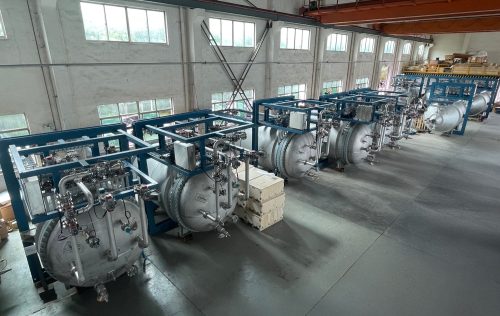
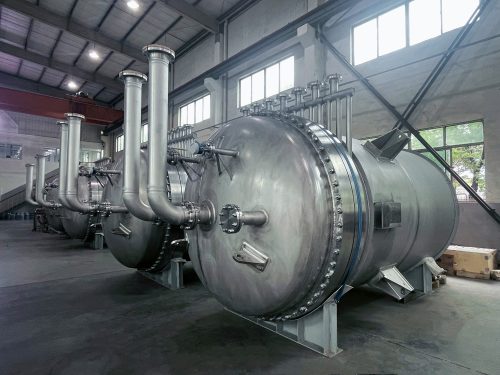
The FUNDABAC® candle filter is used for both the second-stage purification and bicarbonate polishing steps, with cake washing and drying built into the filtration cycle to recover lithium that would otherwise be lost with the discarded solids. Heel volume filtration further recovers the residual product that collects at the bottom of the vessel, allowing losses of lithium carbonate and lithium sulfate to be reduced to negligible amounts and letting washed solids go directly to tailings rather than back to the leach circuit. Pressure-driven operation gives stable cake formation and predictable cycle times regardless of brine variability, and filter media options including PP, PVDF, and stainless steel withstand the corrosive conditions typical of lithium brine and sulfate liquors. Where flow rates are higher, such as semi-continuous purification ahead of precipitation, the CONTIBAC® semi-continuous thickener handles the duty with automated cake discharge, reducing operator intervention across both spodumene and brine-based flow sheets.
Where are FUNDABAC® and CONTIBAC® filters deployed in lithium production?
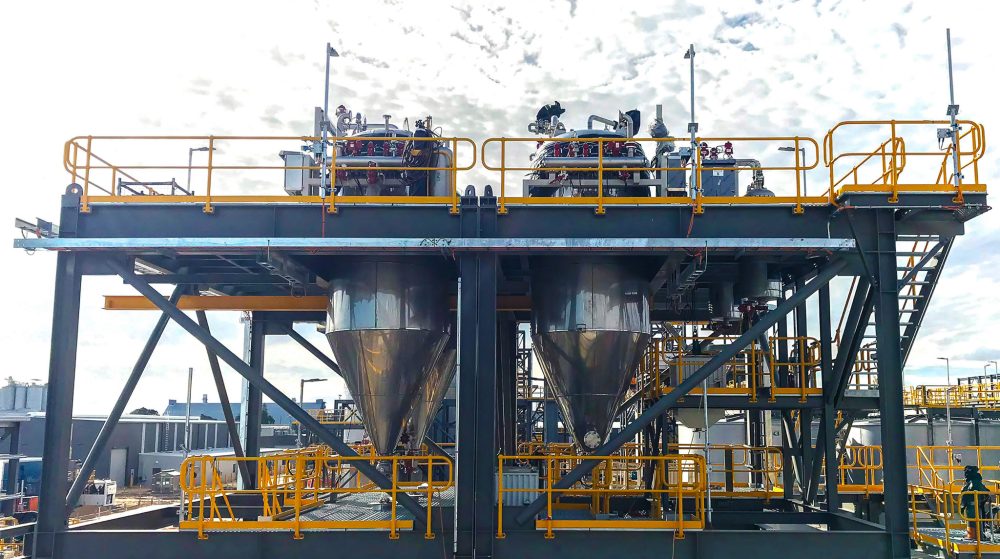
Lithium carbonate and hydroxide production is one of DrM’s highest-volume filtration applications, with installations across five continents. FUNDABAC® and CONTIBAC® filters are in operation in hard-rock spodumene projects in Australia and brine-based operations across South America’s Lithium Triangle, alongside plants in North America and Asia. This reference base spans both production routes, hard-rock spodumene conversion and brine evaporation, each with different feed characteristics but the same purification and polishing requirements downstream. The depth of reference across regions and process routes reflects how consistently these requirements recur across lithium carbonate and hydroxide plants worldwide.
What operational benefits does candle filtration deliver in lithium processing?
Because cake washing and drying reduce lithium losses to negligible amounts, operators recover product that non-optimized filtration would otherwise send to waste, while the ability to route washed solids directly to tailings avoids the cost of returning them to the leach circuit. The FUNDABAC® filter uses permanent internals that are not replaced during maintenance, only the filter media is exchanged, which combined with the absence of moving parts gives a total lifecycle cost typically 2 to 3 times lower than competing filter designs. Fully automated cake discharge reduces operator intervention on both FUNDABAC® and CONTIBAC® systems, and the closed, enclosed vessel design simplifies HSE compliance when handling corrosive brine or sulfate liquors under continuous production conditions.
As battery manufacturers shift toward nickel-rich cathode chemistries that call for lithium hydroxide rather than carbonate, purification and polishing filtration becomes even more central to plant economics, since hydroxide circuits carry tighter impurity tolerances. Direct lithium extraction from brine is a related but distinct route to battery-grade lithium, with its own filtration flow sheet covered separately in DrM’s review of filtration in DLE processes. Across both established production routes, DrM’s reference base in lithium carbonate and hydroxide purification continues to grow alongside the broader lithium supply build-out.
Key takeaways
- Candle filtration removes more than 99.9% of solids 1 micron and larger, protecting ion exchange and reverse osmosis systems downstream.
- Lithium carbonate and hydroxide production is DrM’s largest single filtration application by installed volume, spanning five continents.
- Heel volume filtration and integrated cake washing reduce lithium losses to negligible amounts during purification and polishing.
- CONTIBAC® semi-continuous thickeners handle high-flow lithium purification duties with fully automated cake discharge.
- FUNDABAC® filters replace only the filter media at maintenance, cutting lifecycle cost 2 to 3 times versus competing filter designs.
Frequently Asked Questions
What particle size can FUNDABAC® candle filters remove in lithium carbonate and hydroxide production?
A properly sized FUNDABAC® candle filter removes more than 99.9% of solid particulate 1 micron and larger. This protects downstream ion exchange resin beds and reverse osmosis membranes from particulate carryover, so those units run as designed rather than being sized around chronic fouling.
Why is filtration needed before ion exchange and reverse osmosis in lithium purification?
Ion exchange resins and reverse osmosis membranes are highly sensitive to particulate carryover. After pH adjustment with soda ash and caustic soda precipitates magnesium, calcium, manganese, and zinc from the lithium sulfate solution, that slurry must be filtered before the filtrate reaches the ion exchange circuit. Without it, solids foul the downstream units, causing unplanned downtime and resin replacement costs.
What are the two filtration steps in lithium carbonate and hydroxide purification?
The first is second-stage purification, where a candle filter removes the precipitated magnesium, calcium, manganese, and zinc from the lithium sulfate solution before ion exchange. The second is bicarbonate polishing, which removes unreacted solids after lithium carbonate is converted to soluble lithium bicarbonate with CO2, improving product purity before bicarbonate decomposition.
How do FUNDABAC® filters reduce lithium losses during processing?
Cake washing and drying are built into the FUNDABAC® filtration cycle to recover lithium that would otherwise be lost with the discarded solids. Heel volume filtration further recovers the residual product that collects at the bottom of the vessel, reducing losses of lithium carbonate and lithium sulfate to negligible amounts and letting washed solids go directly to tailings rather than back to the leach circuit.
When should a CONTIBAC® thickener be used instead of a FUNDABAC® filter?
Where flow rates are higher, such as semi-continuous purification ahead of precipitation, the CONTIBAC® semi-continuous thickener handles the duty with automated cake discharge, reducing operator intervention across both spodumene and brine-based flow sheets. FUNDABAC® is used for the second-stage purification and bicarbonate polishing steps.
What makes FUNDABAC® filters cost-effective over their lifecycle?
The FUNDABAC® filter uses permanent internals that are not replaced during maintenance — only the filter media is exchanged. Combined with the absence of moving parts, this gives a total lifecycle cost typically 2 to 3 times lower than competing filter designs. Media options including PP, PVDF, and stainless steel withstand the corrosive conditions of lithium brine and sulfate liquors.