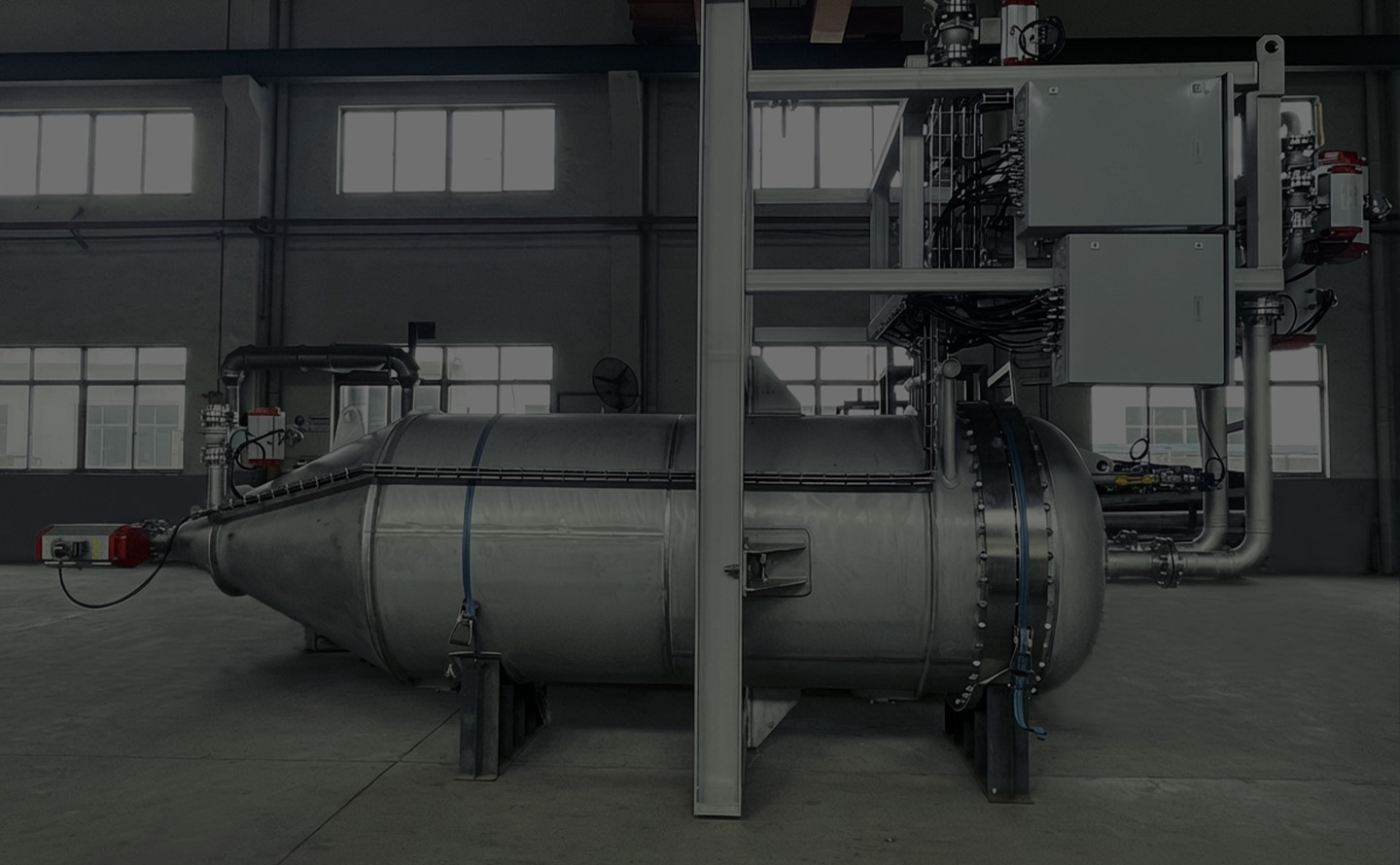
CONTIBAC® Candle Filter for Semi-Continuous Slurry Thickening
Clear filtrate and a thickened slurry in one step, from a fully enclosed, automated pressure filter built on the proven FUNDABAC® design.
When is CONTIBAC® the Right Configuration?
CONTIBAC® is the right choice when solids should leave the filter as a concentrated, pumpable slurry rather than a dry cake, while clear filtrate keeps flowing with minimal downtime. The solids are thickened in their own mother liquor and discharged from the conical bottom of the vessel. Short filtration cycles with back-flushable candles keep the flow rate stable, even with fine solids.
Thickened Slurry, Not a Dry Cake
Solids leave as a pumpable slurry in their mother liquor, ready to go on to a downstream filter, dryer or reactor, or back into the process.
Clear Filtrate for Reuse
Finely woven media, felts or membranes produce a filtrate free of solids, for example process water recovered for reuse on site.
Continuous Operation, Even with Fine Solids
Short cycles build very thin cakes that are back-flushed off automatically, so fine, blinding solids do not slow the flow. This suits continuous plants such as loop reactors and brine circuits.
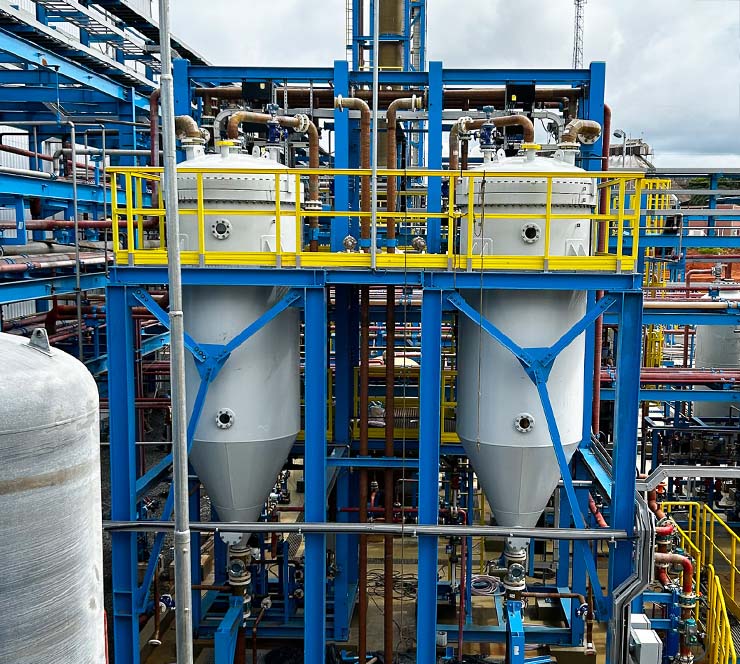
How Does CONTIBAC® Thicken a Slurry?
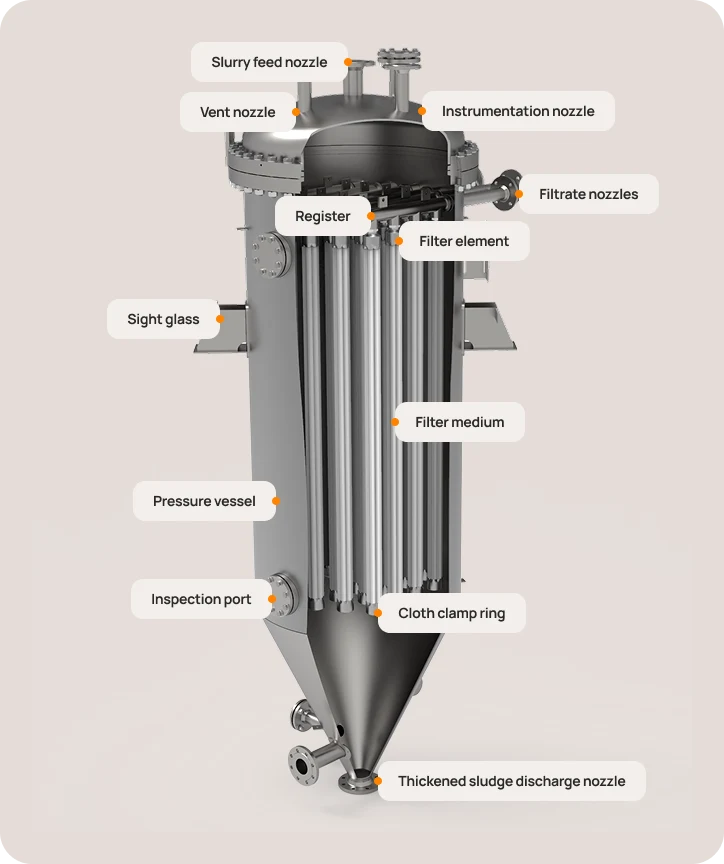
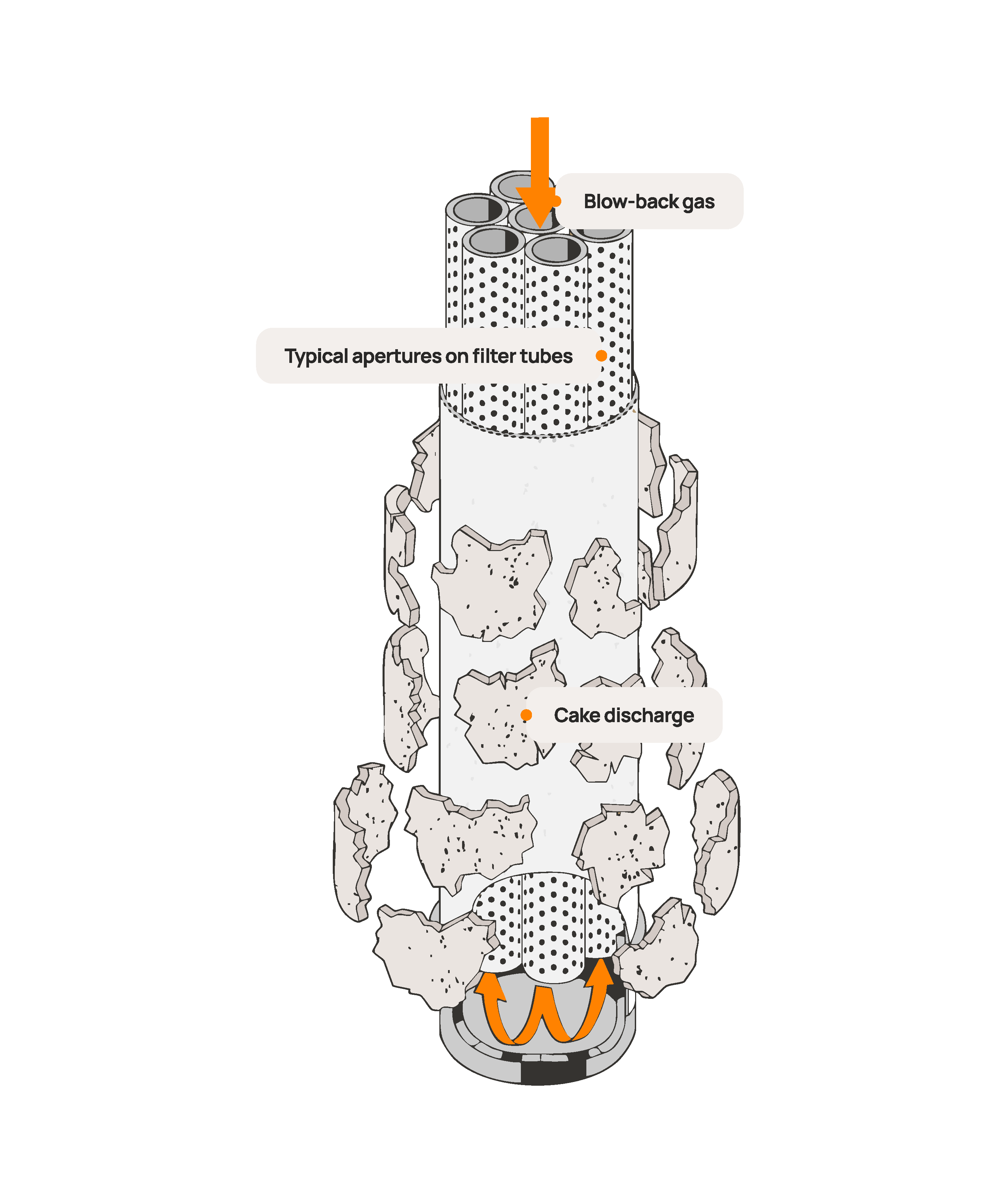
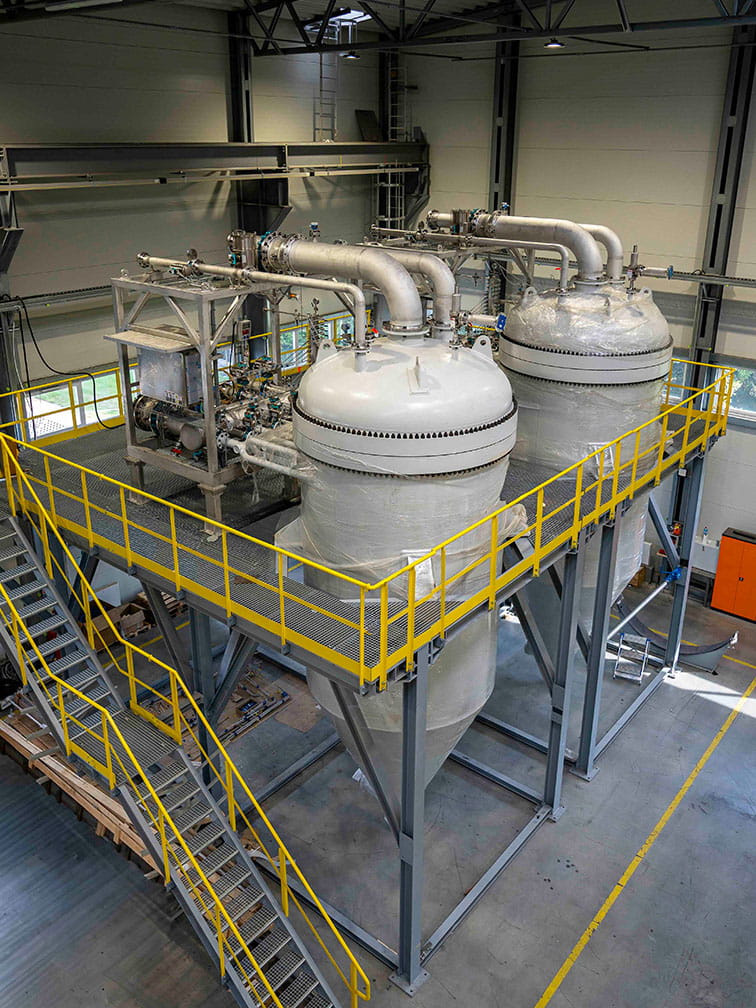
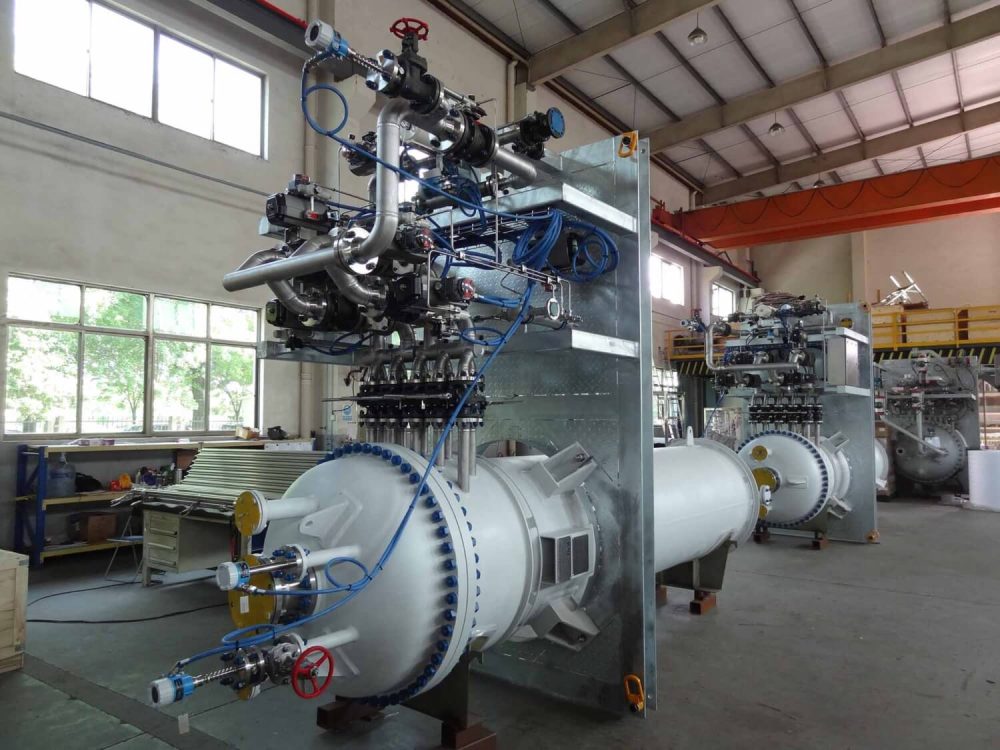
A pressure vessel with a conical bottom holds a set of vertical candles covered with filter medium. The register at the top collects the filtrate from all candles, and the solids leave as thickened sludge through the discharge nozzle at the bottom of the cone.
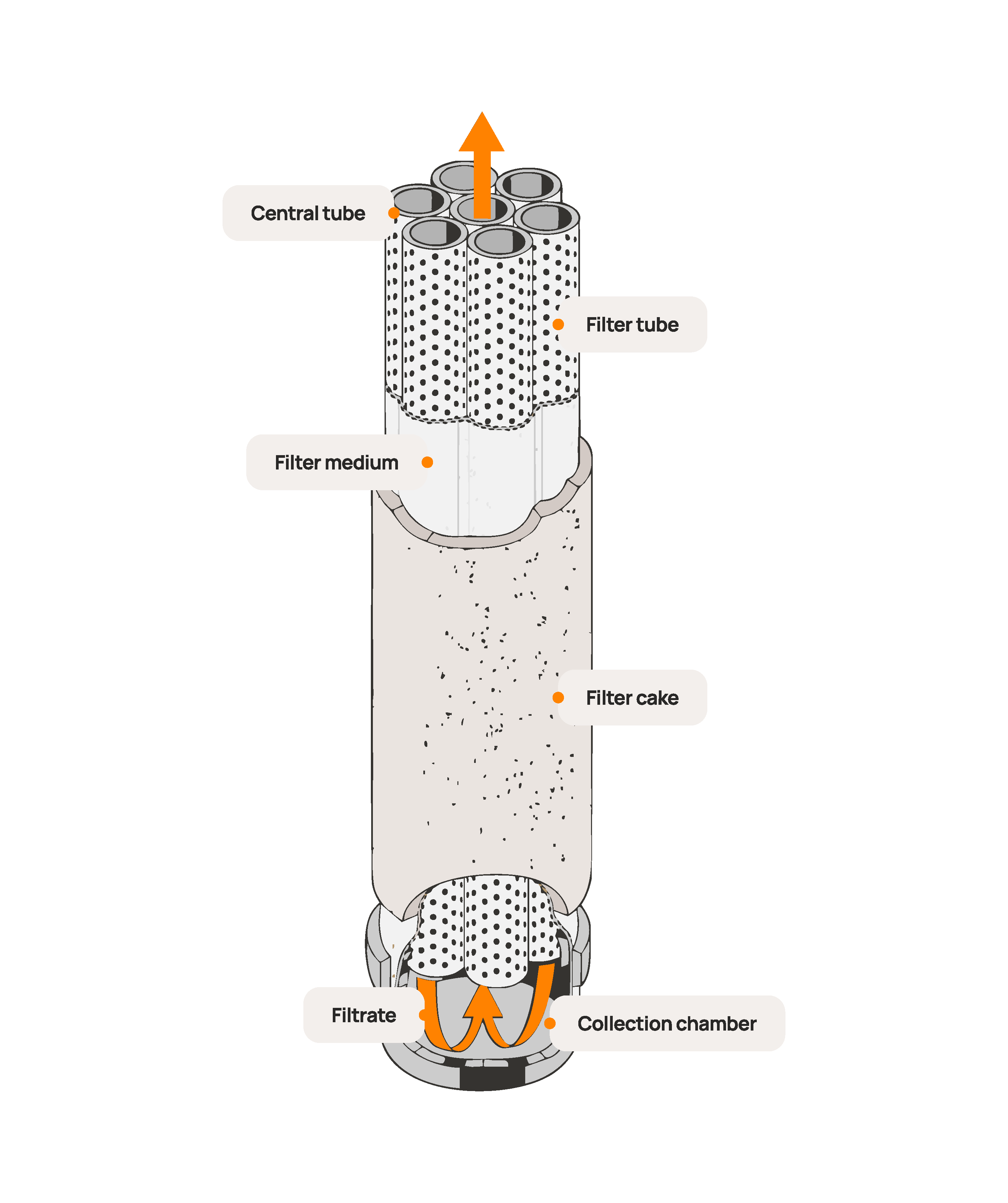
The slurry is fed into the vessel and the liquid passes through the filter medium into the candles, leaving as clear filtrate. Filtration runs in short cycles, so only a very thin cake builds up and the flow rate stays high, even on fine or blinding solids.
At the end of each cycle, gas or filtrate is pushed back through the candles and the cake is released. The solids settle into the conical bottom and leave as a concentrated slurry in their own mother liquor, while the back-flush regenerates the filter medium for the next cycle.
What Makes CONTIBAC® Operationally Efficient?
Building on the proven FUNDABAC® design, CONTIBAC® is configured for thickening rather than dry cake discharge. This keeps installations simpler, gas consumption low and downtime short.
In semi-continuous operation, flow stops briefly for back-flush and discharge. In continuous operation (Conti-CONTIBAC®), the candles work in filtrate groups and one group is back-flushed while the others keep filtering, so the flow never stops.
Because the solids leave as a slurry rather than a dried cake, there is no cake drying step and back-flush cycles are short. The semi-continuous version needs little gas; the continuous version needs none and has no downtime.
One design covers several duties: thickening slurries, clarifying liquids or polishing filtrates, such as filter press filtrate in mining. It also works with filter aid (precoat, body feed or both) for difficult separations.
Fully Automatic, Closed-System Filtration
Minimal operator involvement, enclosed design, and continuous operation for safe, clean, and reliable filtration in demanding industrial environments.
Compatible with filter aid (precoat, body feed, or both) for challenging separations
Around 40 filter media to choose from, including woven media, felts and membranes
Fully enclosed, with no operator contact with the process stream
Fully automatic via PLC or DCS, without operator intervention
Available as standalone filter, semi-skid or full-skid system
Pilot and lab-scale units available for trials and process validation
Filtration Area
Customizable, ranging from lab-scale units (0.012 m²) to industrial-scale systems (300 m²)
Operating Pressure
Up to 20 barg. Designed for a wide range of industrial pressure conditions only dependent on selected design conditions for filter vessel
Operating Temperature
Up to 180°C, special design up to 350 °C
Operating Modes
Semi-continuous, or continuous as Conti-CONTIBAC®
Filter Elements
Candle-type, back-washable
Filter Media
PP, PVDF, PTFE, PPS, PEEK, PE, UHMWPE, SS 316L
Vessel Materials
Carbon steel, stainless steel (various grades), titanium, high nickel alloys, fiberglass
Lining Options
Hard rubber, PVDF, PFA, ECTFE, Enamel
Filter Internals
Stainless Steel (various grades) incl. high nickel alloys, PP, PVDF, PPS.
Discharge Mode
Thickened slurry, intermittent or continuous
Automation
Compatible with PLC or DCS for fully automatic operation
Cleaning
Back-flush with gas or filtrate; CIP compatible
How Does CONTIBAC® Compare with FUNDABAC®?
All three filters are built on the same candle filter design. The difference is how the solids leave the filter and whether the flow ever stops.
| Metric | FUNDABAC® | CONTIBAC® | Conti-CONTIBAC® |
|---|---|---|---|
| Solids leave as | Dry cake or slurry | Thickened slurry in mother liquor | Thickened slurry in mother liquor |
| Operation | Batch | Semi-continuous | Continuous |
| Downtime | Longer | Short | None |
| Gas consumption | Higher | Low | None |
| Installation | Standard to complex | Simplified | More complex |
| Cake washing, drying, heel volume filtration | Yes | No | No |
| Batch integrity | Full | No | No |
You need a dry cake rather than a thickened slurry
The cake must be washed or dried inside the filter
Product loss matters and the heel volume should be filtered too
Full batch integrity is required, for example in pharma production
 Loads from YouTube












BP OIL
"DrM filters have operated reliably and trouble-free, keeping our amine in excellent condition with minimal operator involvement."

Cydsa
"DrM filters have been in long-term operation and remain in excellent condition. We are very pleased with both the filters and the support provided."

Hitech
"DrM filters have been operating trouble- free for many years and remain in excellent condition. We are very satisfied and hope to cooperate again in the future."

GNFC
"We are able to operate our TDI plant at over 100% of its rated capacity with a single DrM filter running for more than 3 months continuously. The performance has been very satisfactory."

Roquette
"DrM filters have been in operation for over a decade and remain in excellent condition. They require little maintenance, and the support from DrM has been excellent."

SKC
"Over the years, we have gradually expanded to seven DrM filters, appreciating their reliability and low maintenance in our operations."


Pilot & Lab Testing
for Your Process
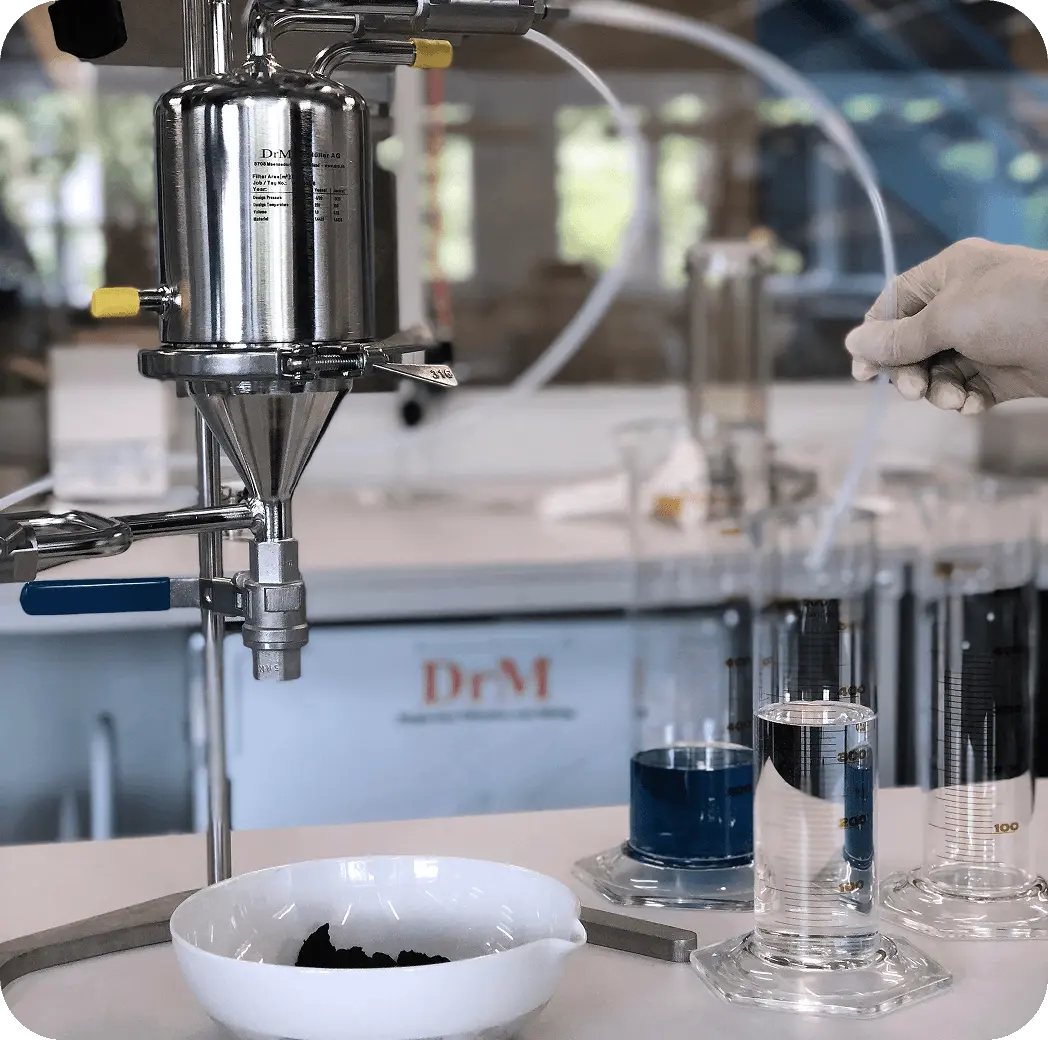
Lab and pilot-scale units are available for on-site or off-site testing under real process conditions. For CONTIBAC®, testing establishes the filtration rate, the cycle time, the filtrate clarity and the solids concentration the thickened slurry can reach, before you commit to a full-scale system.
- Lab units from 0.012 to 0.048 m² for early feasibility trials with small product volumes
- Pilot units from 0.16 to 50 m², designed on the same principle as the industrial filter
- Scale-up based on measured cycle times and filtrate quality
Frequently Asked Questions
FAQCan CONTIBAC® recycle catalyst back to a slurry reactor?
Yes. In continuous slurry-bed processes, CONTIBAC® separates the catalyst from the product stream and returns it to the reactor as a concentrated slurry in the reaction liquid. The clear filtrate, free of catalyst fines, goes on to downstream purification such as distillation. Short cycles keep only a thin cake on the candles, so little catalyst is held in the filter and the catalyst concentration in the reactor stays stable.
Can CONTIBAC® work alongside a filter press?
Yes. A typical setup uses CONTIBAC® as a polishing stage after a filter press. Filter presses often run with coarse filter cloths, so their filtrate still carries solids. CONTIBAC® turns it into clear water that can be reused, for example for pump seals or high-pressure washing, and sends the removed solids back to the filter press feed tank.
How is CONTIBAC® different from a gravity thickener?
A gravity thickener relies on settling in a large open tank, so the clarity of the overflow depends on how well the solids settle. CONTIBAC® filters under pressure through filter media, so filtrate clarity is set by the media rather than by settling behavior. Short cycles give a high filtrate flux, which keeps the filter compact, and the process stream stays fully enclosed.
Should the back-flush use gas or filtrate?
Both are possible. Gas back-flush is common in semi-continuous operation and uses little gas, because the cakes are thin. Back-flushing with filtrate avoids gas consumption entirely and keeps gas out of the process stream; it’s the approach used in continuous operation. The right choice depends on the process and is confirmed during testing.
Does semi-continuous operation interrupt the downstream process?
Not necessarily. The pauses for back-flush and discharge are short, and a small filtrate buffer tank after the filter keeps the flow to downstream equipment constant, so CONTIBAC® can run around the clock. If no interruption at all is acceptable, the continuous Conti-CONTIBAC® keeps the flow running during back-flush.
How does the thickened slurry get from the filter to the next vessel?
The thickened slurry leaves through the discharge nozzle at the bottom of the conical vessel and is piped to the next step, by gravity or with a pump. Because it stays pumpable, no chute or hopper is needed as with dry cake discharge, the receiving vessel does not have to sit directly below the filter, and the transfer stays fully enclosed.
Resources & Downloads
Download the FUNDABAC® and CONTIBAC® filtration brochure, our guide to filter performance monitoring, and the application questionnaire. Send us the completed questionnaire and our engineers will define the right CONTIBAC® configuration for your process.