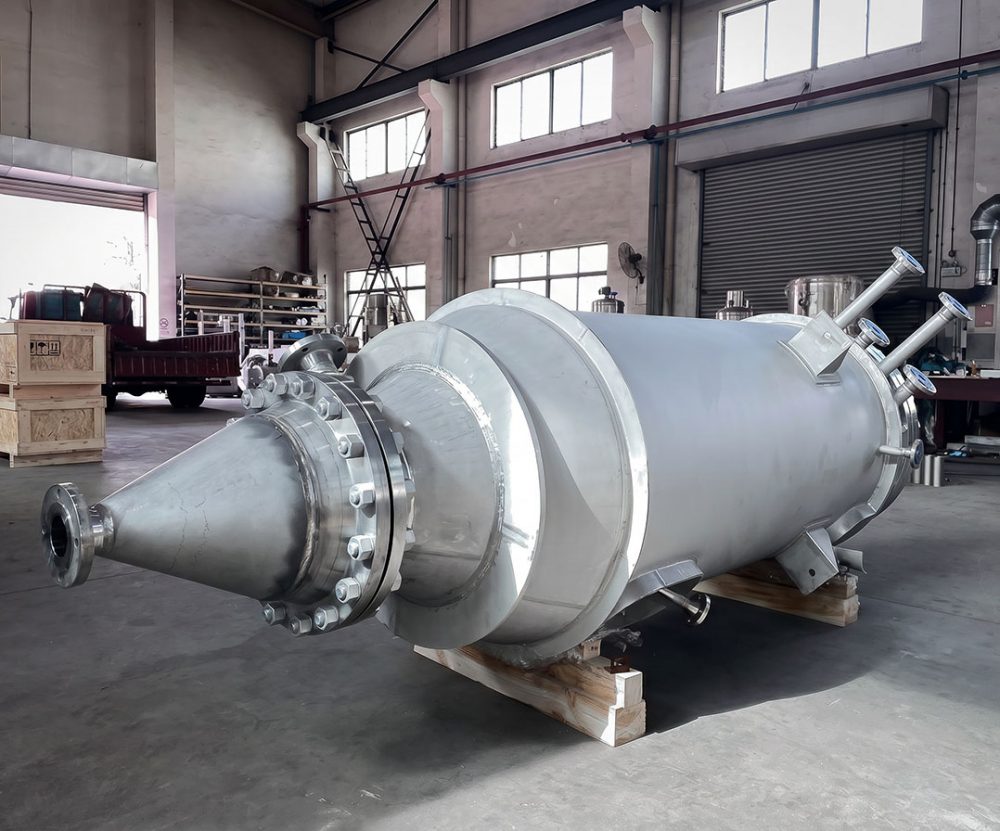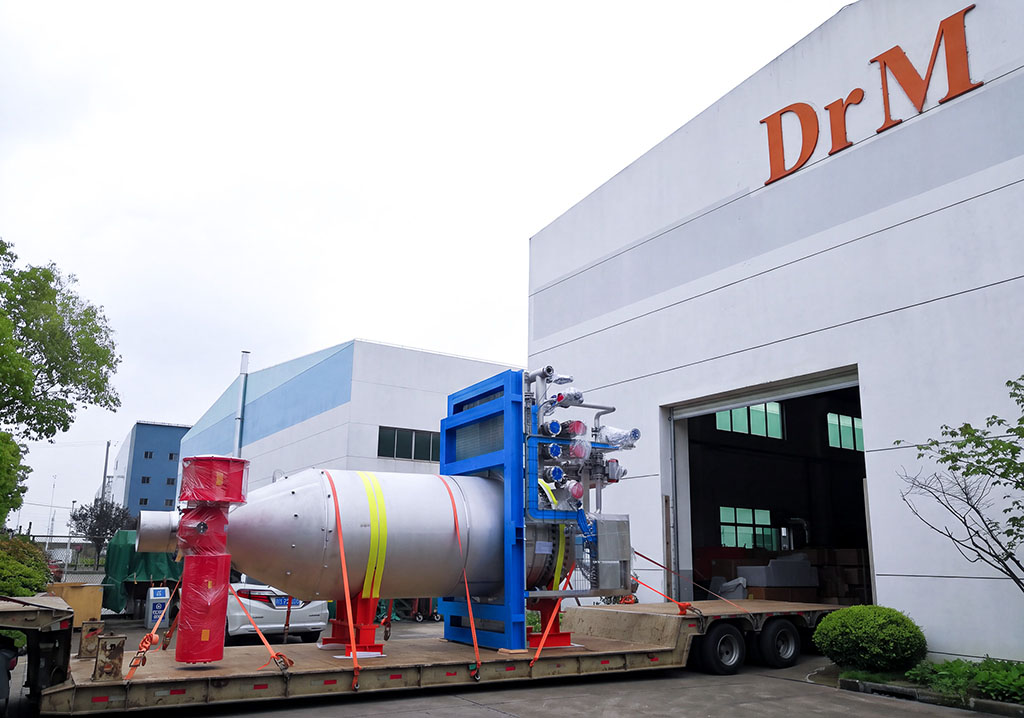
Most polyether polyols for polyurethane are made by adding propylene oxide or ethylene oxide to a starter alcohol such as glycerin or propylene glycol, with KOH or NaOH as catalyst. Polyol catalyst removal follows: the catalyst is neutralized with acid or bound to a magnesium silicate adsorbent, and the solids are filtered out of a hot, viscous liquid. Highly active DMC catalysts avoid this step for some grades, but KOH-catalyzed polyols, EO-capped grades, PEG and PPG still require it. The filtration step determines how completely the solids are retained, how much polyol leaves with the cake, and how the cake is handled afterward.
Why is catalyst removal from polyether polyols a difficult filtration duty?
The solids can be fine, the liquid is viscous, and the cake holds product. Depending on how the neutralization is run, potassium salts formed with sulfuric or phosphoric acid can precipitate as very fine particles. Magnesium silicate added to bind the catalyst must be retained completely, since any breakthrough carries potassium into the filtrate. Viscosity requires filtration at elevated temperature, and the process runs under nitrogen to prevent oxidation and color formation.
Achievable flow rates depend on viscosity, solids content, filter aid addition and particle size distribution. DrM has filtered polyols at rates from 60 to 1,500 L/m²·h. The cake that forms is polyol-wet and can be sticky, depending on temperature and viscosity at discharge. In some reported cases with other filter types, the cake adhered to the vessel and had to be removed manually. Polyol left in the cake is lost product and adds to disposal cost.
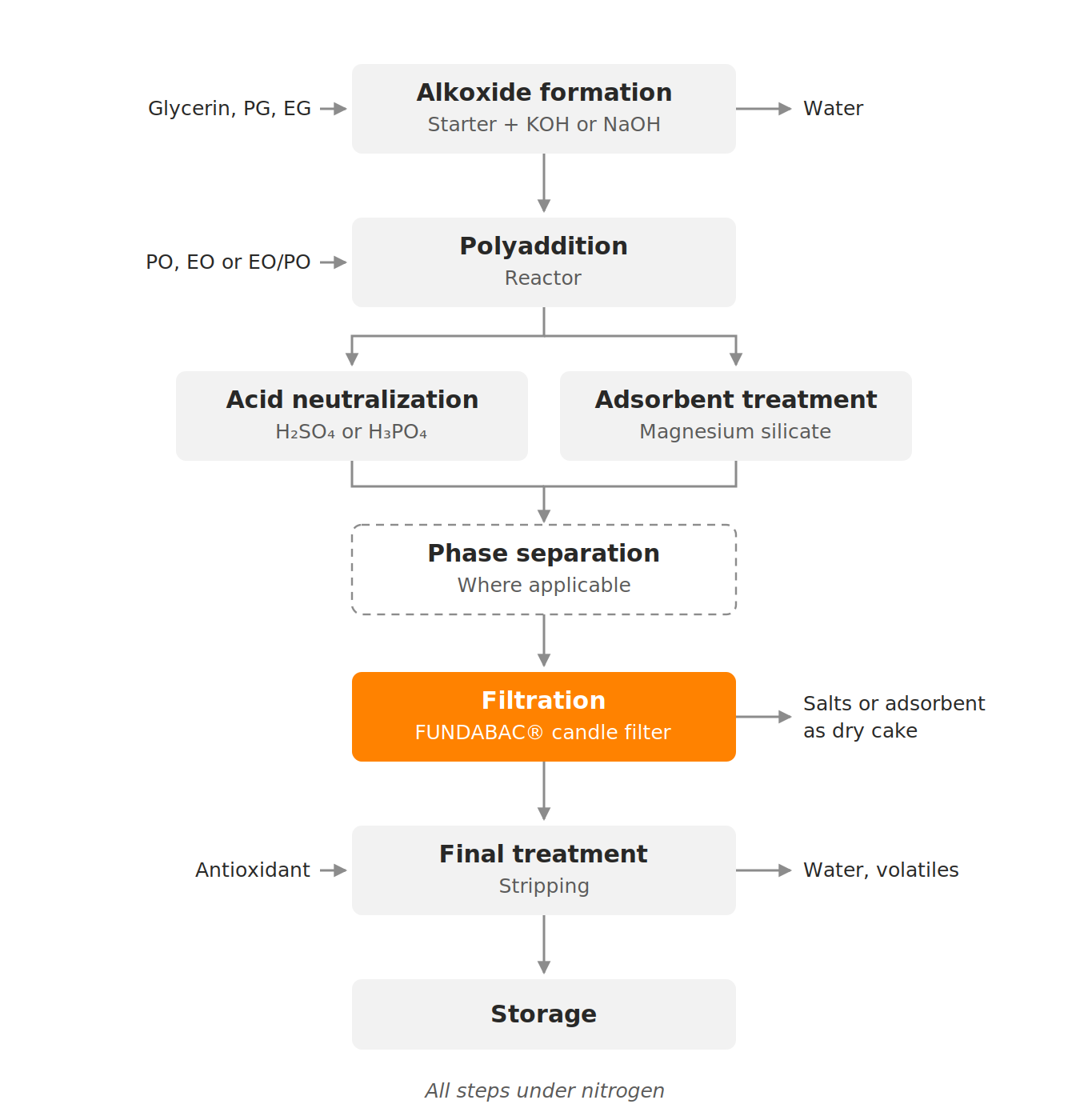
Polyether polyol production with KOH catalyst: both catalyst removal routes end at filtration.
How does a candle filter separate salts and magnesium silicate from polyol?
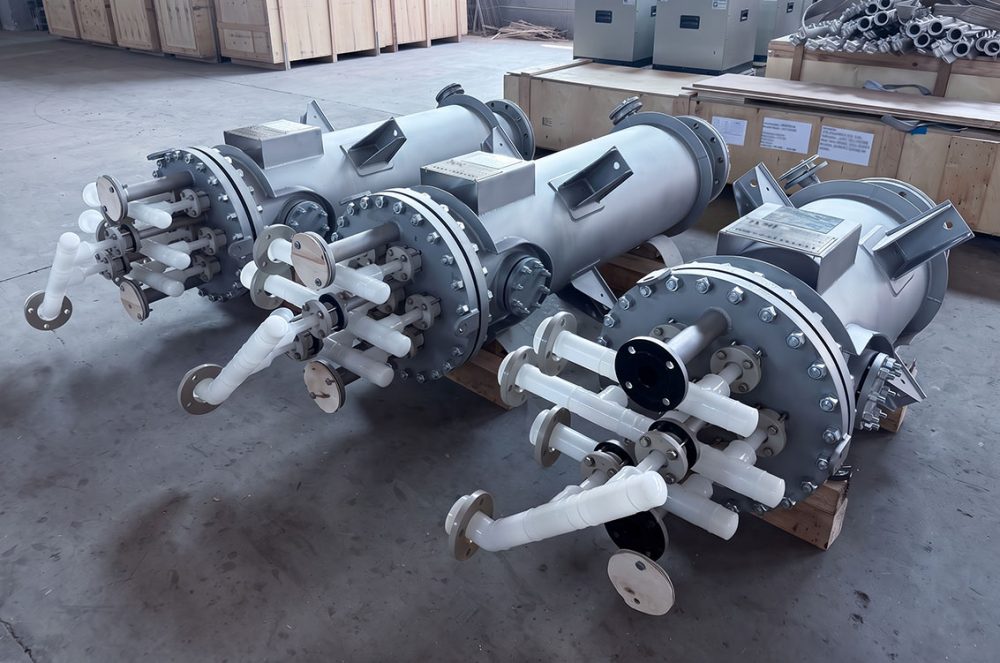
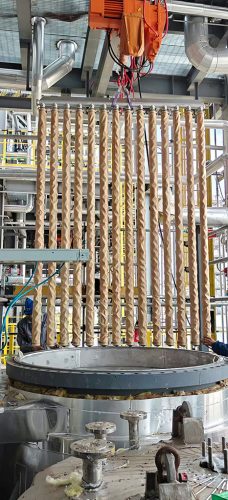
A candle filter retains the solids on synthetic cloth inside a pressure vessel and discharges them by gas blow-back. In the FUNDABAC® candle filter, polyol is pumped into the vessel and passes through cloth-covered candles, while the solids build a cake on the outside. In a prefiltration step, filtrate is recirculated until the purity specification is confirmed, either by a turbidity meter on the filtrate outlet or by lab testing during each cycle, and is then sent forward.
The synthetic cloths have a much smaller pore size than the metallic screens used on some pressure filters, so a precoat layer is normally not required. Magnesium silicate is relatively coarse and acts like a filter aid itself, so polyol treated with it is often filtered without any added filter aid. Filtration without filter aid has also given good results in tests following acid neutralization.
After filtration, the cake is dried with nitrogen to up to 70% dry matter. A reverse gas pulse expands the cloth and releases the cake through the bottom outlet. Because the cake is dried in place, discharge is complete, without the manual cleaning needed where a wet, sticky cake adheres to the filter. Where required, the cake can be discharged into a closed receiver.
How does heel volume filtration reduce polyol loss between batches and grades?
Heel volume filtration filters the liquid remaining below the candles, so the entire batch passes through the cake. At the end of filtration, the heel is pumped back through spray nozzles at the top of the vessel and filtered over the full candle area. This patented step differs from designs where only a small part of the filter area is available for the heel, such as scavenger plates on horizontal centrifugal discharge plate filters. For producers running several polyol grades in campaigns, this matters at every changeover: each batch is filtered completely, without carrying a large heel of one grade into the next.
How does the FUNDABAC® compare with filter presses and horizontal plate filters?
| Parameter | FUNDABAC® | Filter press | Horizontal plate filter |
|---|---|---|---|
| Closed operation under nitrogen | During filtration and drying | Opened for discharge | Yes |
| Cake discharge | Gas blow-back, dry cake | Manual; polyol cake can stick | Centrifugal, rotating plates |
| Heel filtration | Full filter area (patented) | Not applicable | Limited, via scavenger plate |
| Typical filter media | Synthetic cloth, usually no precoat | Cloth, often with filter aid | Metallic screens, typically precoated |
| Moving parts in vessel | None | Plate shifting mechanism | Rotating shaft and seal |
| Automation | Fully automatic | Labor-intensive discharge | Automated |
The FUNDABAC® has no rotating parts or shaft seals inside the vessel. The main wear part is the synthetic filter cloth, typically replaced every 6 to 18 months, depending on production frequency and cloth care during downtime. Filter media are available in PP, PVDF, PTFE, PPS, PEEK, PE and stainless steel 316L. Standard designs operate up to 180°C, with special designs up to 350°C.
Where is the FUNDABAC® used in polyol production, and how is a filter sized?
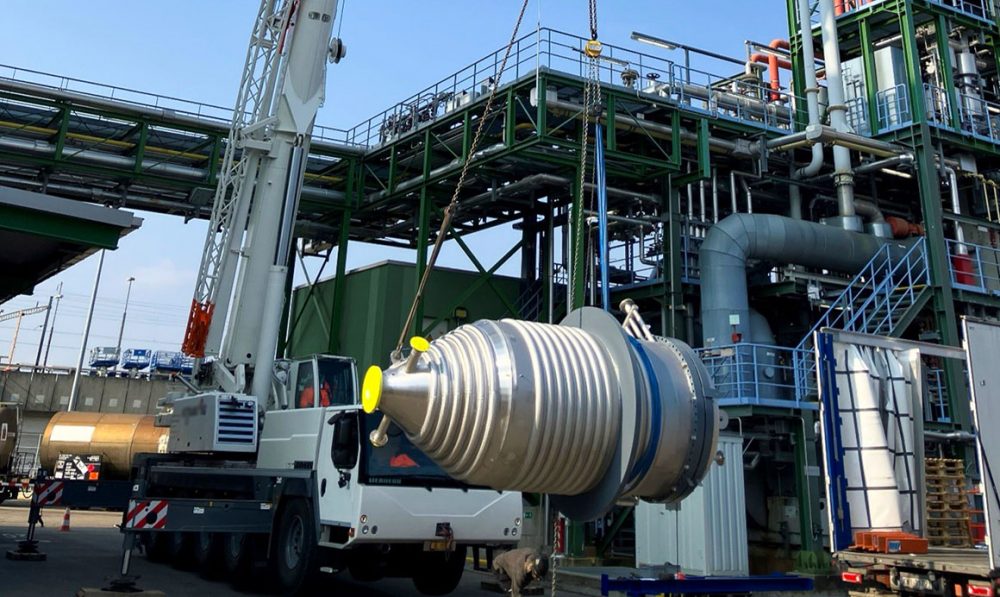
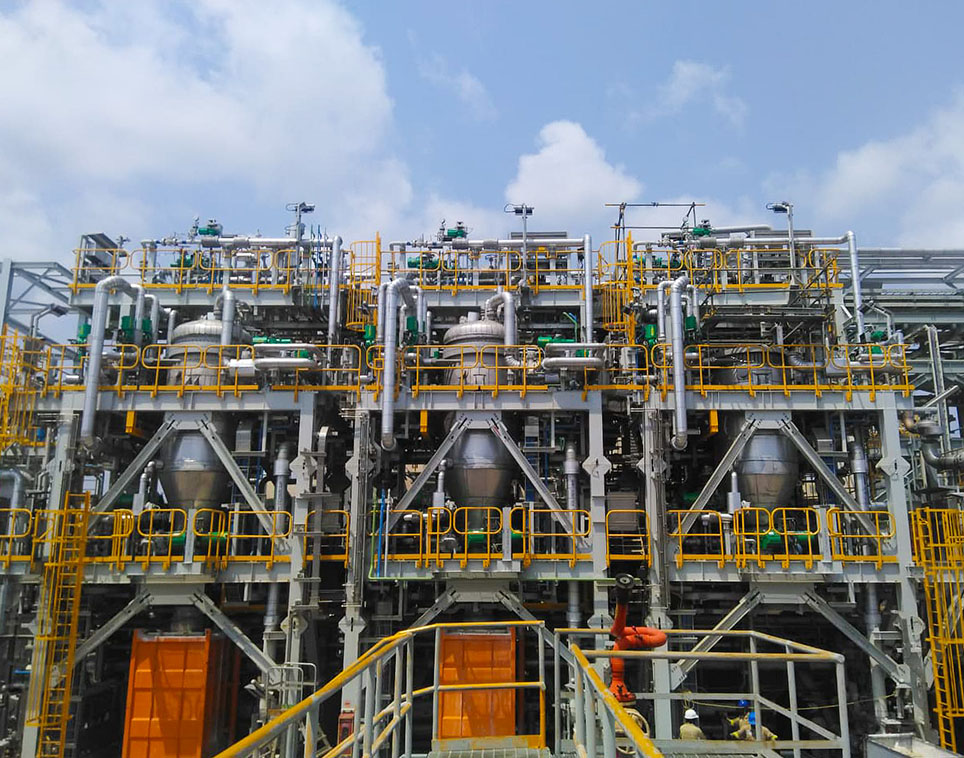
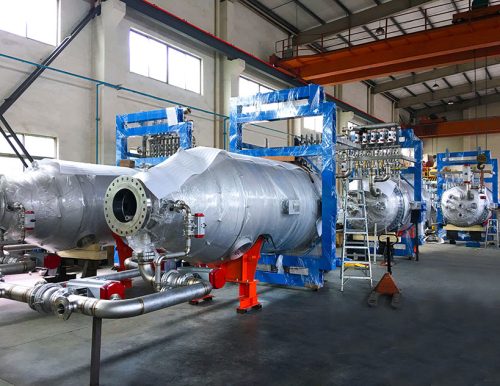
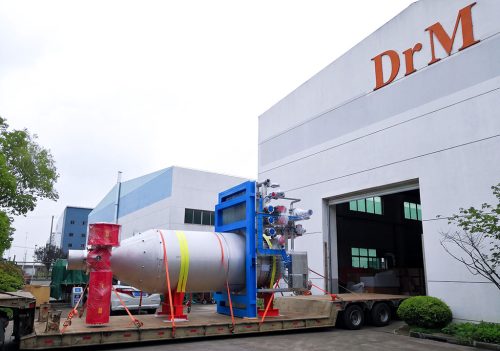
DrM has supplied more than 110 FUNDABAC® filters for polyol and polyglycol production in 18 countries across Europe, Asia and the Americas, covering polyurethane polyols as well as PEG and PPG. Industrial units range up to more than 100 m² of filter area.
Filter size and filter aid demand are process specific. They depend on viscosity, batch size, reaction time and solids loading, among other factors, and because most polyol plants operate in batches, batch size strongly influences the required filter size. DrM tests on the actual slurry, from bench scale at 0.012 m² through pilot filters to industrial systems of up to 300 m², on the same operating principles at each scale.
Where polyols are still made with alkaline catalysts, catalyst removal is a filtration problem as much as a chemistry problem. The neutralization or adsorbent chemistry sets the achievable residual potassium. The filter determines how completely the solids are retained, how much polyol leaves with the cake, and in what condition the cake is discharged.
Key takeaways
- KOH-catalyzed polyether polyols require removal of neutralization salts or magnesium silicate adsorbent by filtration.
- Candle filters with synthetic cloth normally filter polyol without precoat, often without any added filter aid.
- Gas blow-back discharges polyol filter cake at up to 70% dry matter after drying in the filter.
- Heel volume filtration processes the full batch, limiting polyol loss and carryover between grades.
- More than 110 FUNDABAC® filters operate in polyol and polyglycol production across 18 countries.
Frequently Asked Questions
Do polyols made with DMC catalysts need filtration?
Not always. Highly active DMC catalysts are used at such low concentrations that the catalyst can often remain in the polyol, and no removal step is needed. Polyols made with KOH or NaOH, including many EO-capped grades, PEG and PPG, still require neutralization or adsorbent treatment followed by filtration.
Does the filter determine the residual potassium in the polyol?
No. The neutralization or adsorbent chemistry sets how much potassium is removed from the polyol. The filter’s role is to retain the resulting salts or adsorbent completely, so that no solids carry potassium into the filtrate. Filtrate quality is typically confirmed with a turbidity meter or by lab testing during each cycle.
Should polyol be filtered before or after water stripping?
Both arrangements exist. In a common flowsheet, filtration follows neutralization or adsorbent treatment and an optional phase separation, and water and volatiles are stripped afterward. Water content affects filterability and how sticky the cake becomes, so the best position for the filter is confirmed by testing on the actual process.
What happens to the filter cake after discharge?
The cake is dried with nitrogen in the filter and discharged at up to 70% dry matter, with a low residual polyol content. At this dryness the cake does not stick, and discharge is complete. Washing the cake to recover more polyol is uncommon, because it requires additional steps to separate the polyol from the wash liquid.
What information is needed to size a polyol filter?
Key inputs are polyol viscosity at filtration temperature, batch size, solids type and loading, and the cycle time available between batches. Because filterability depends on how the neutralization or adsorbent step is run, DrM sizes filters based on tests with the actual slurry, from bench scale through pilot filters.