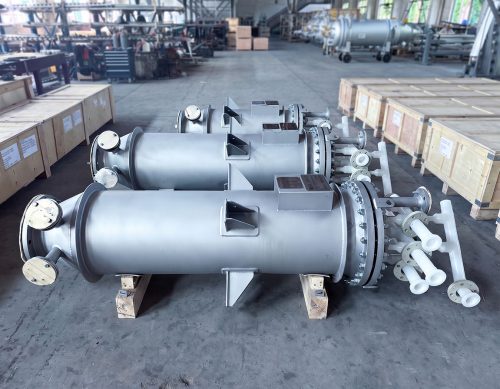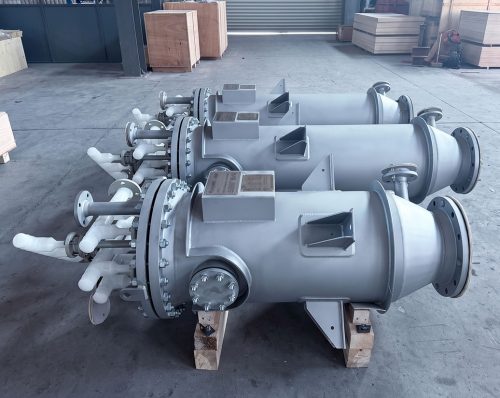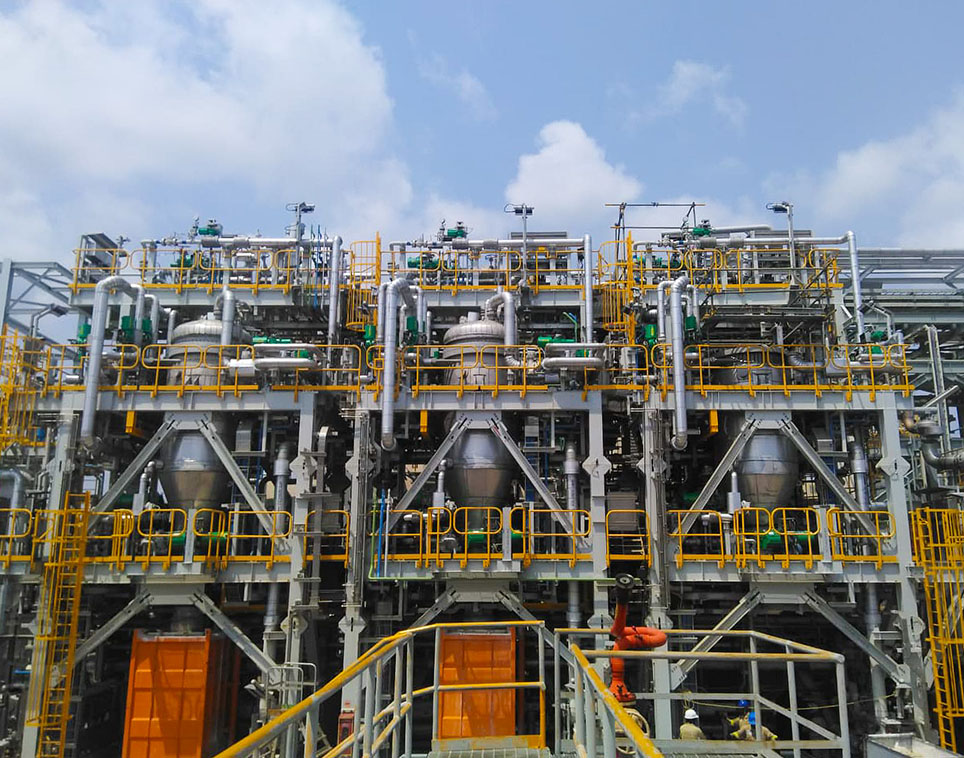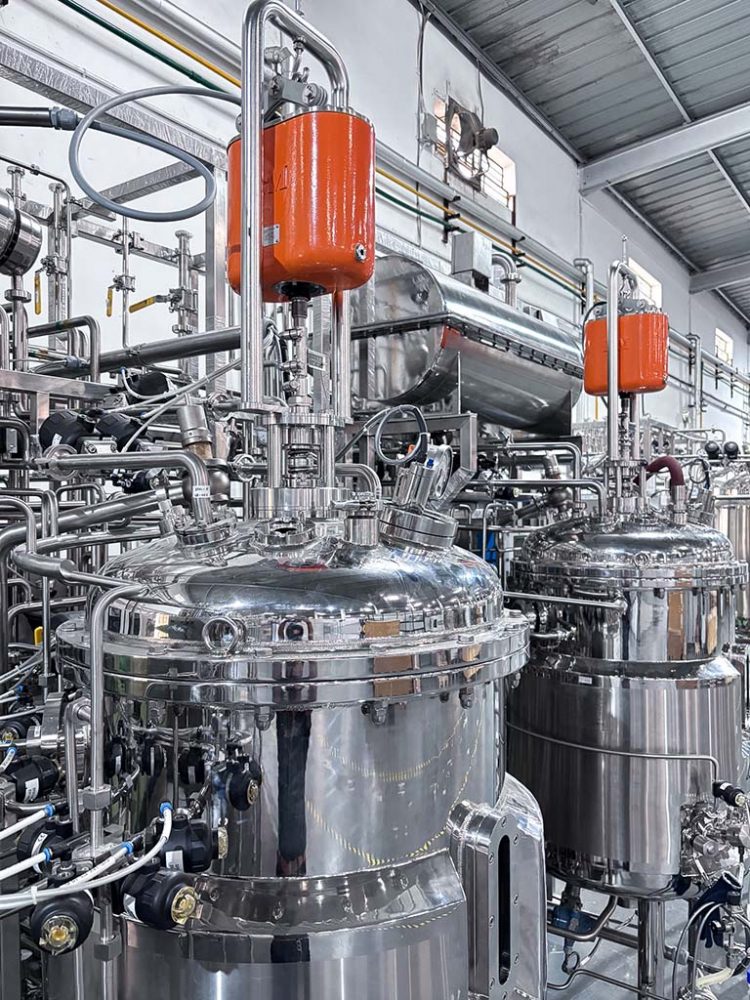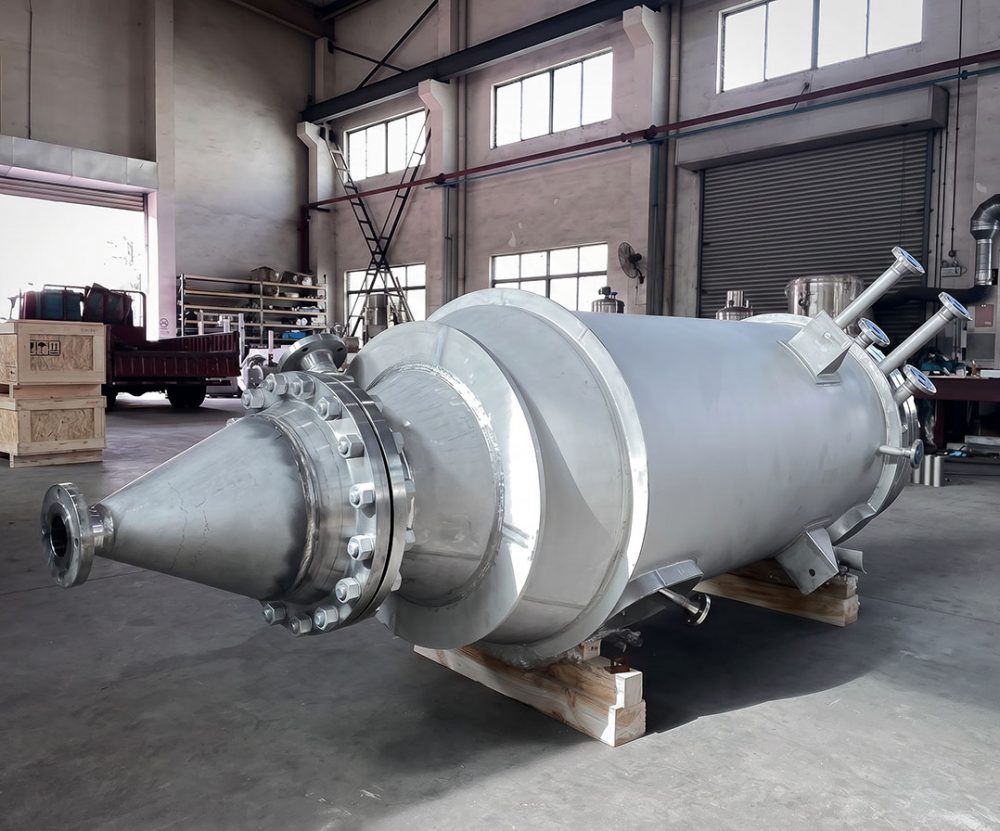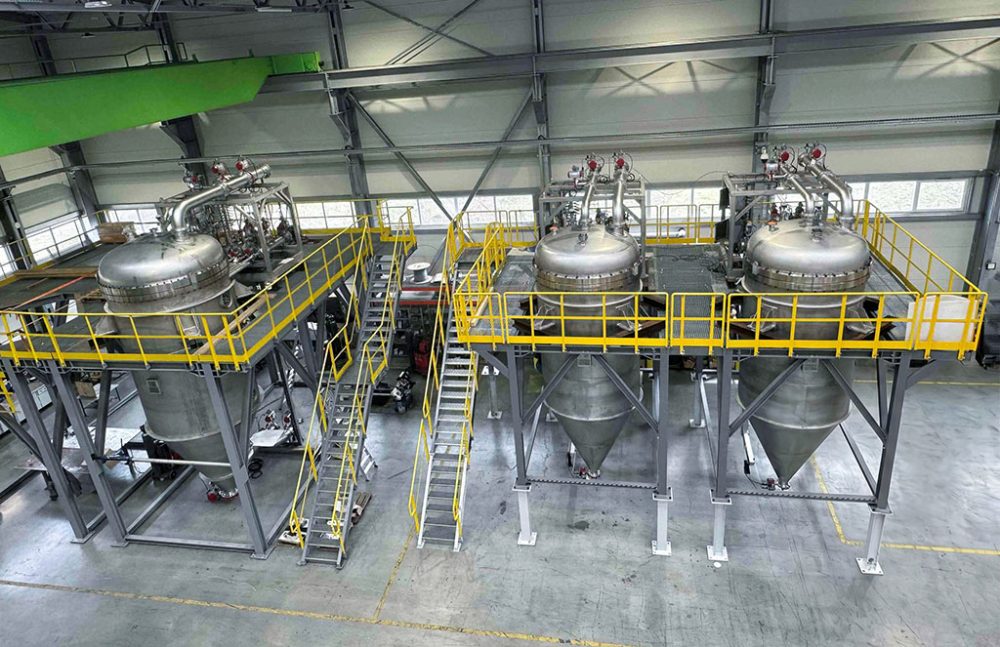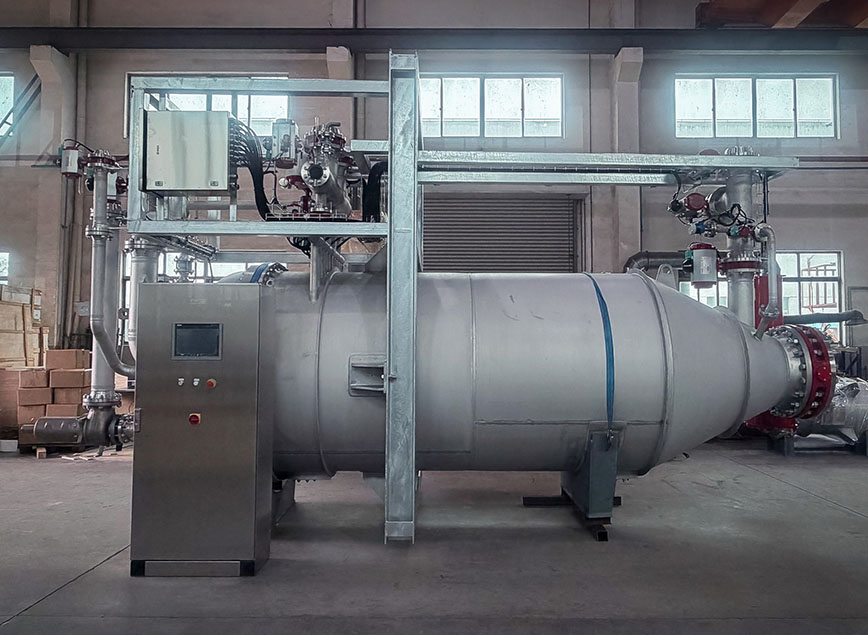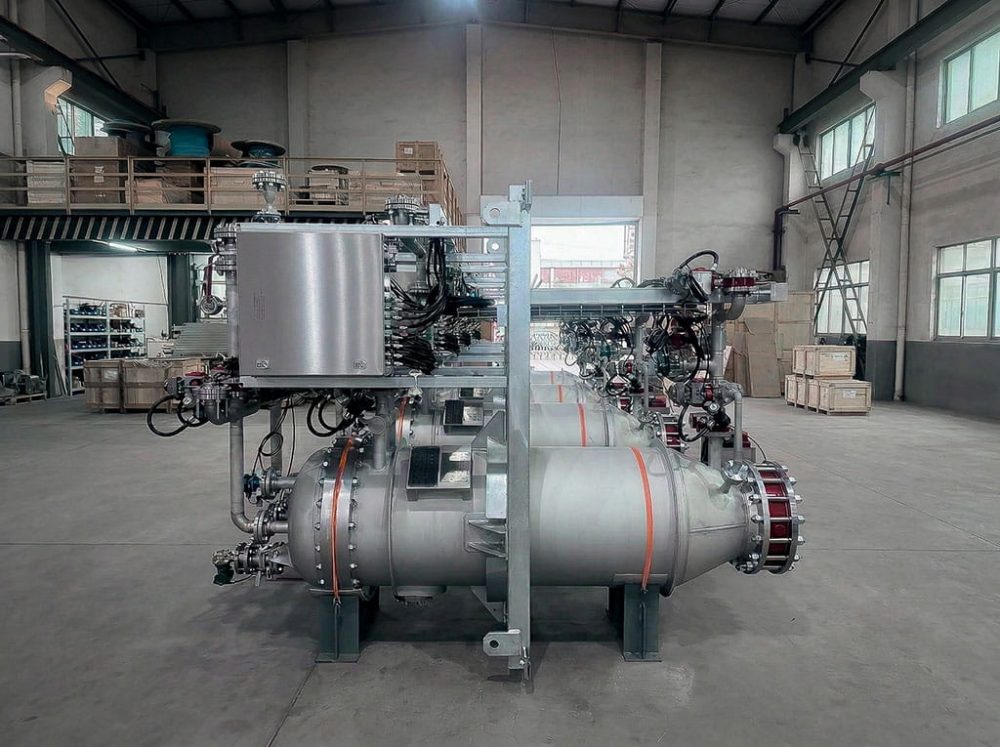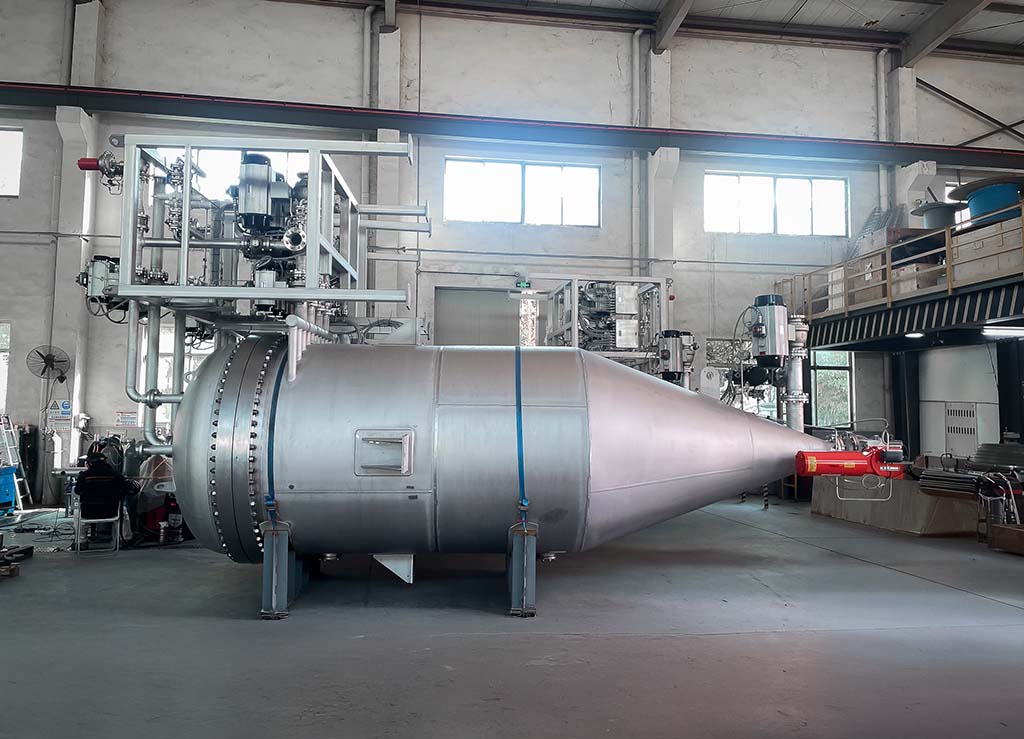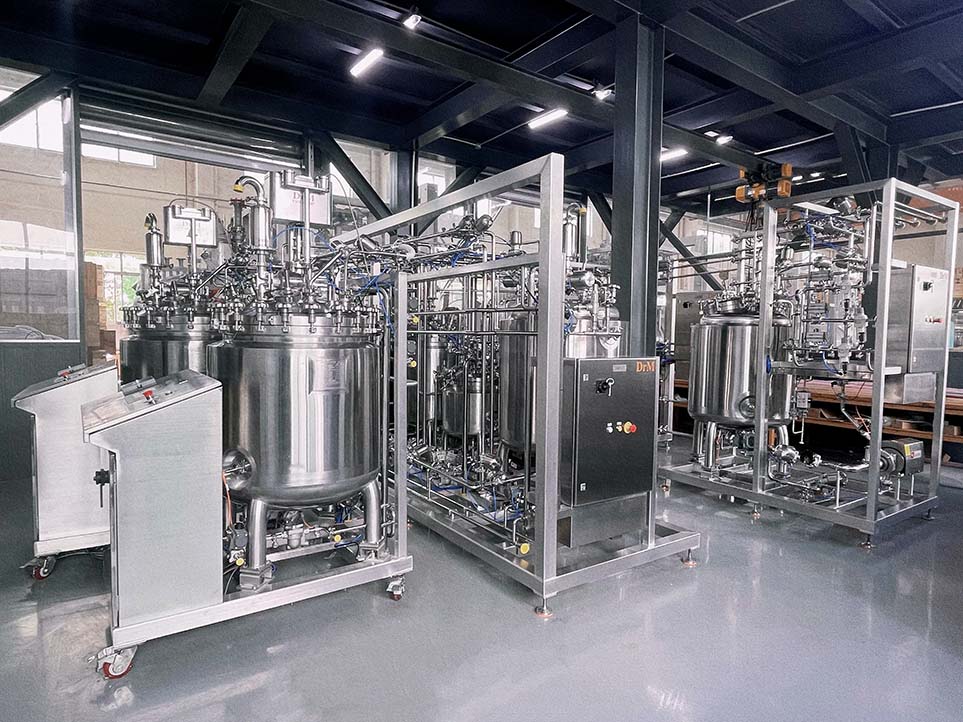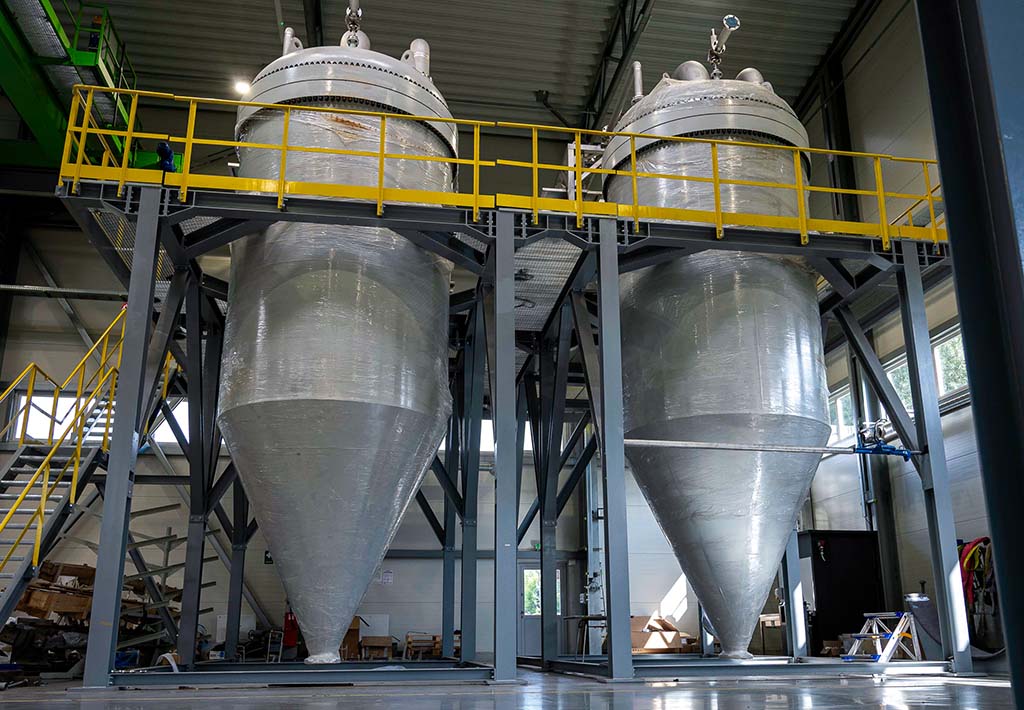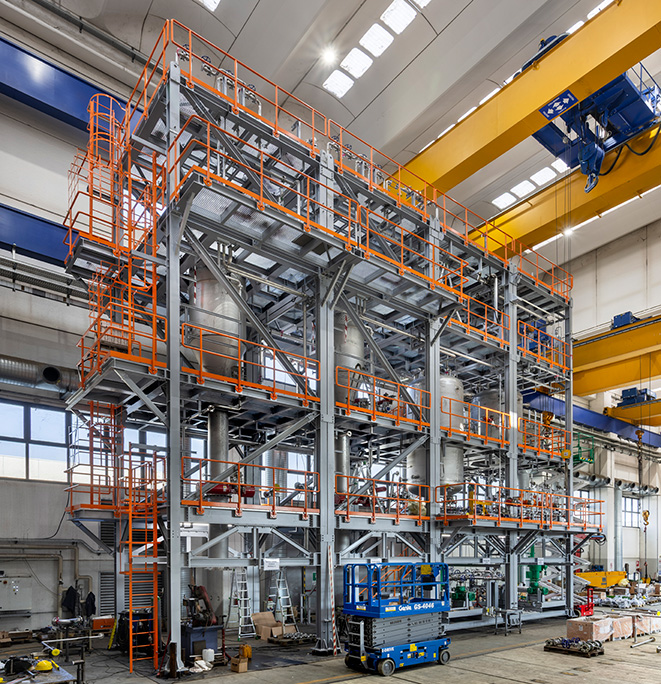
Activated carbon decolorization is a standard step in active pharmaceutical ingredient (API) production. The solid-liquid separation that follows presents specific technical challenges: activated carbon has a wide particle size distribution, and conventional filter cloth often cannot fully retain its finest fraction, which affects filtrate clarity. Batch to batch residue and manual cake discharge add further risk in an environment where closed, clean operation is required.
Project at a glance
| Customer | API manufacturer, China |
| Application | Solid-liquid separation after activated carbon decolorization |
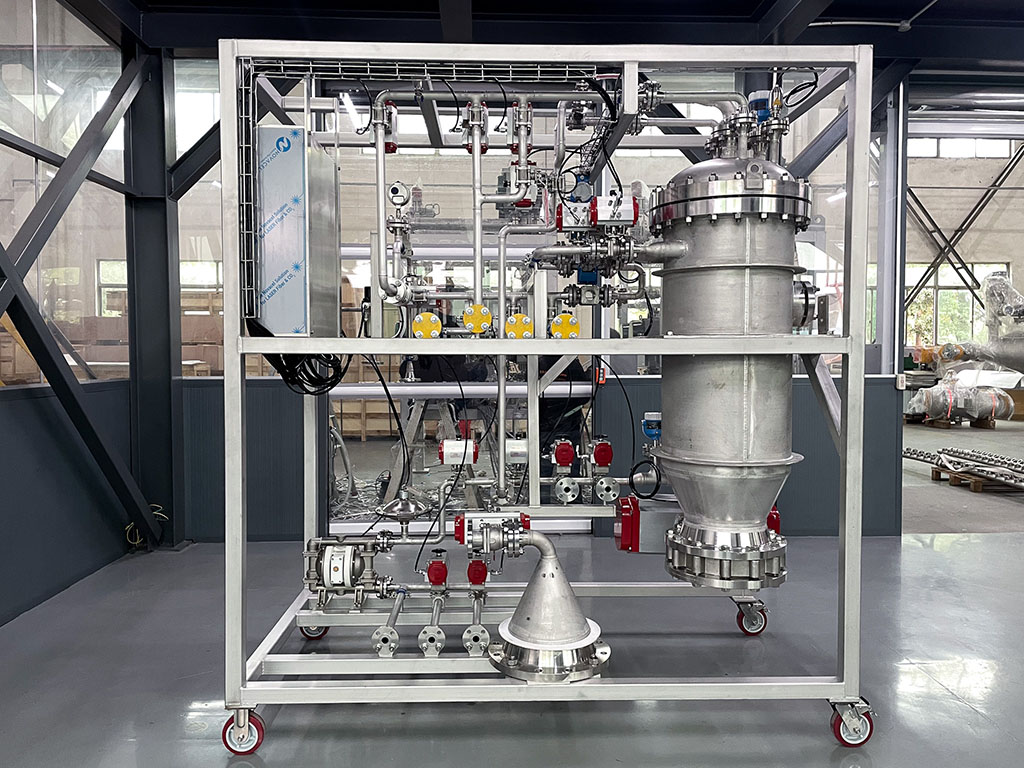
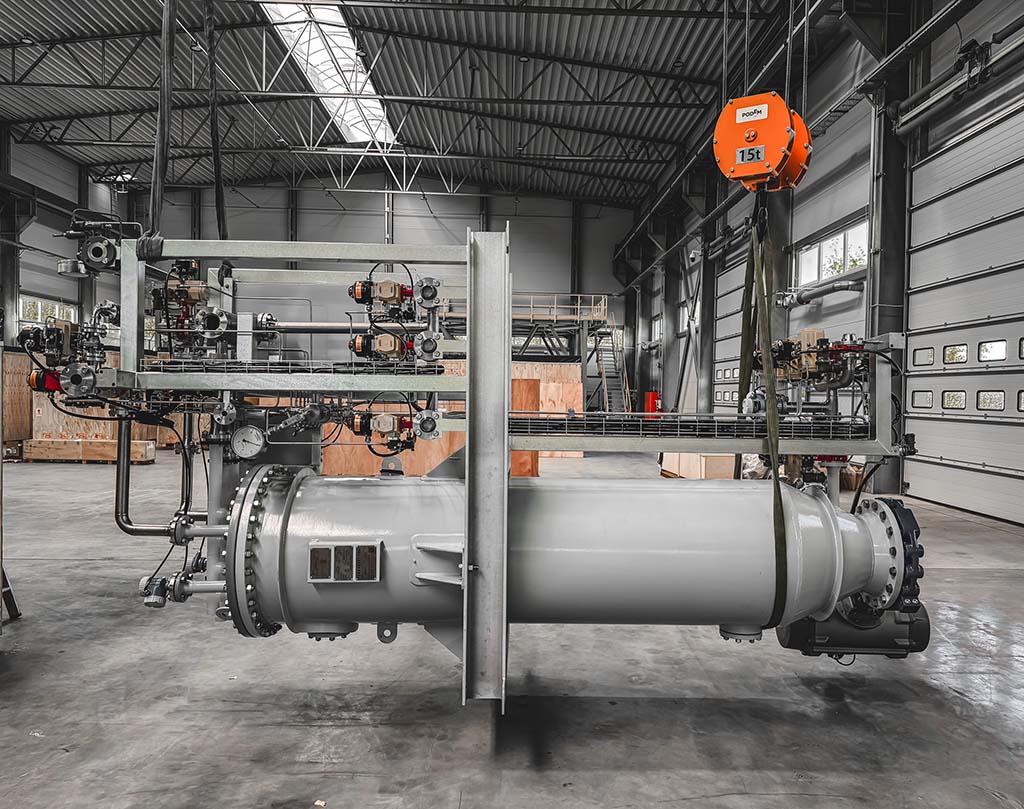
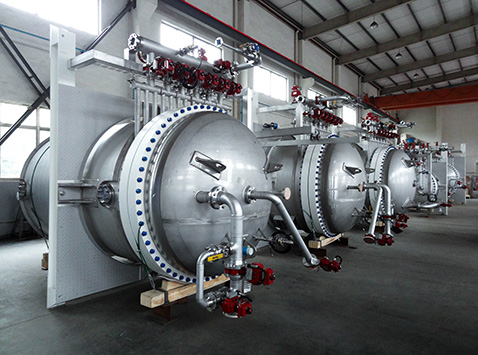
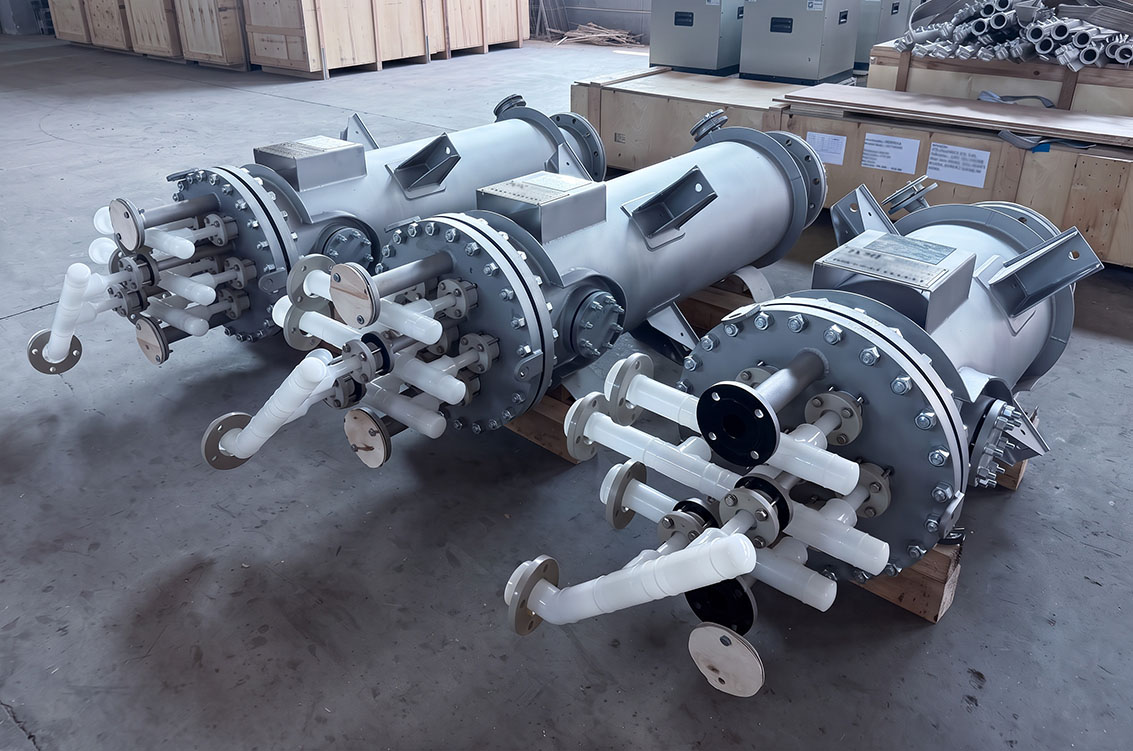
| Scope | Three FUNDABAC® candle filters |
| Process challenge | Retaining fine, broad-particle-size activated carbon while eliminating cross-batch contamination and manual cake handling |
How does activated carbon filtration challenge conventional solid-liquid separation in API production?
Fine activated carbon particles are difficult for standard filter cloth to capture completely, and any breakthrough directly affects filtrate clarity and downstream product purity. Manual cake discharge adds further risk: frequent opening of the vessel increases the chance of cross-batch contamination and conflicts with the closed, clean operation API production requires.
How does the FUNDABAC® candle filter address these separation challenges?
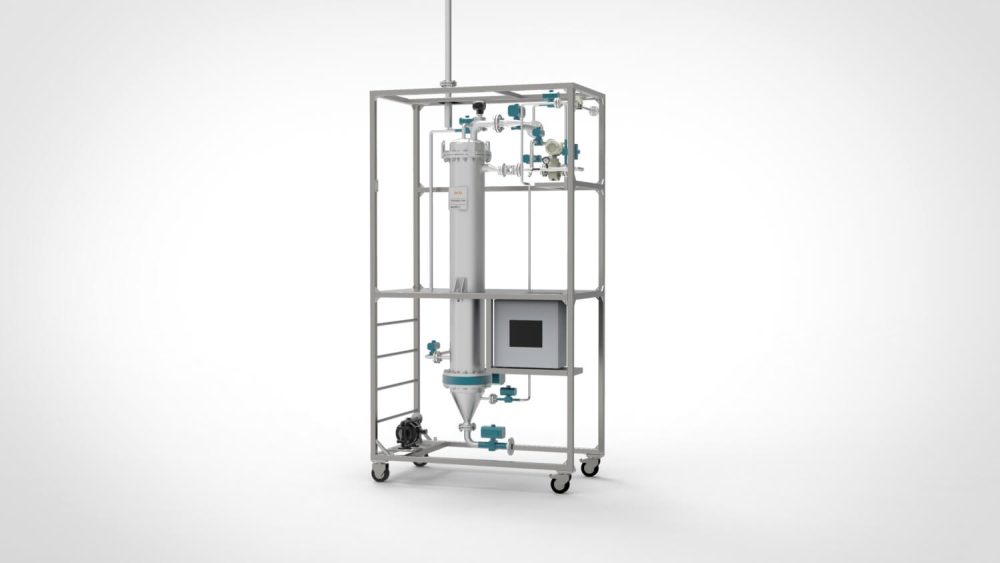
Grooves in the multitube candle help the filter cake adhere evenly, retaining fine carbon particles and keeping the filtrate clear. The system is fully enclosed, so operators have no contact with the process material. The full cycle, filling, filtration, cake drying, and cake discharge, runs automatically under PLC or DCS control, with no manual opening of the vessel between batches. For this project, the filtration system was supplied in an all-plastic construction, which removes the need for the anti-corrosion coating that metal equipment would otherwise require.
What additional benefits does heel volume filtration provide in this application?
DrM’s patented heel volume filtration technology recovers the residual liquid left in the vessel after standard filtration, increasing solid and liquid recovery to near 100% and reducing product loss. A spray washing system built into the same cycle limits solvent consumption during cleaning, and the closed, automated design allows fast changeover between batches, supporting the high-frequency production schedules common in API manufacturing.
This project adds to DrM’s reference base in pharmaceutical solid-liquid separation and demonstrates the FUNDABAC® candle filter’s suitability for activated carbon decolorization across API manufacturing, where purity, closed operation, and automation are simultaneous requirements.