What Material? That’s the Question
Material science has left us with difficult choices. With the proliferation of types of metals, alloys and polymers on the market today, engineers need to carefully weigh cost, flexibility and risk to come up with the best possible combination of materials with the mechanical and chemical properties suited for a specific application. The spread of specialty chemicals applied in an ever increasing range of industries create a constant need for improvement. At the same time the push of the biotech and semiconductors industry into high purity production processes increases the pressure on the supply chain to provide materials and substances which can fulfil these high standards.
Every manufacturer of course needs to set different priorities. We at DrM have been focussing strongly on a set of materials which give us best possible resistance to temperature and chemical attack over most of the service life of the equipment. At the same time, we constantly try to balance life time with cost and combine materials to create an attractive package. Typical components which need to be defined during the evaluation of a filter system are:
- Material of filter elements
- Material and type of registers, insert tubes, clamps etc.
- Type and material of filter media
- Material of pressure vessel
- Material of lining or coating
- Type and material of piping, valves, instruments etc.
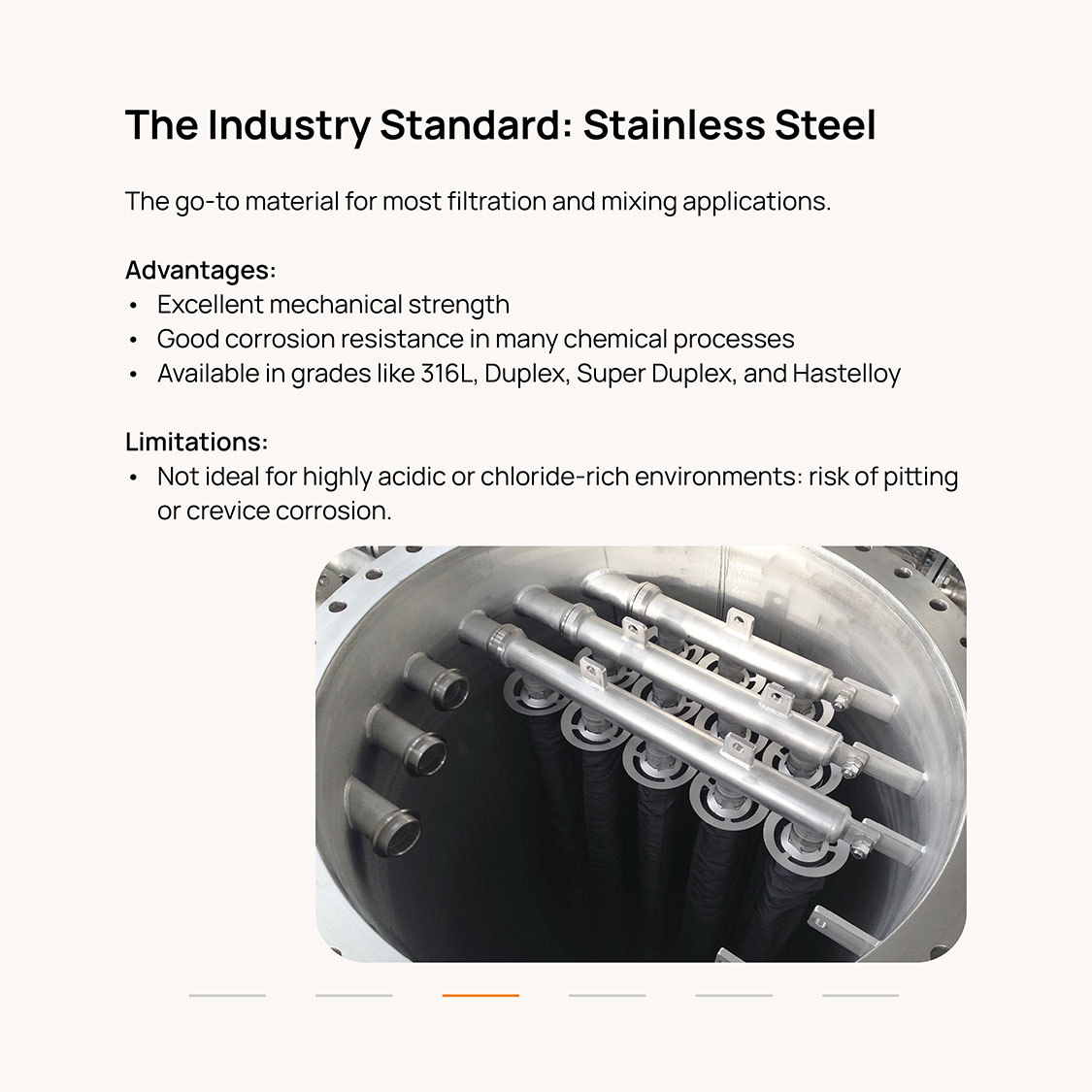
Stainless steel is still the workhorse of the chemical industry
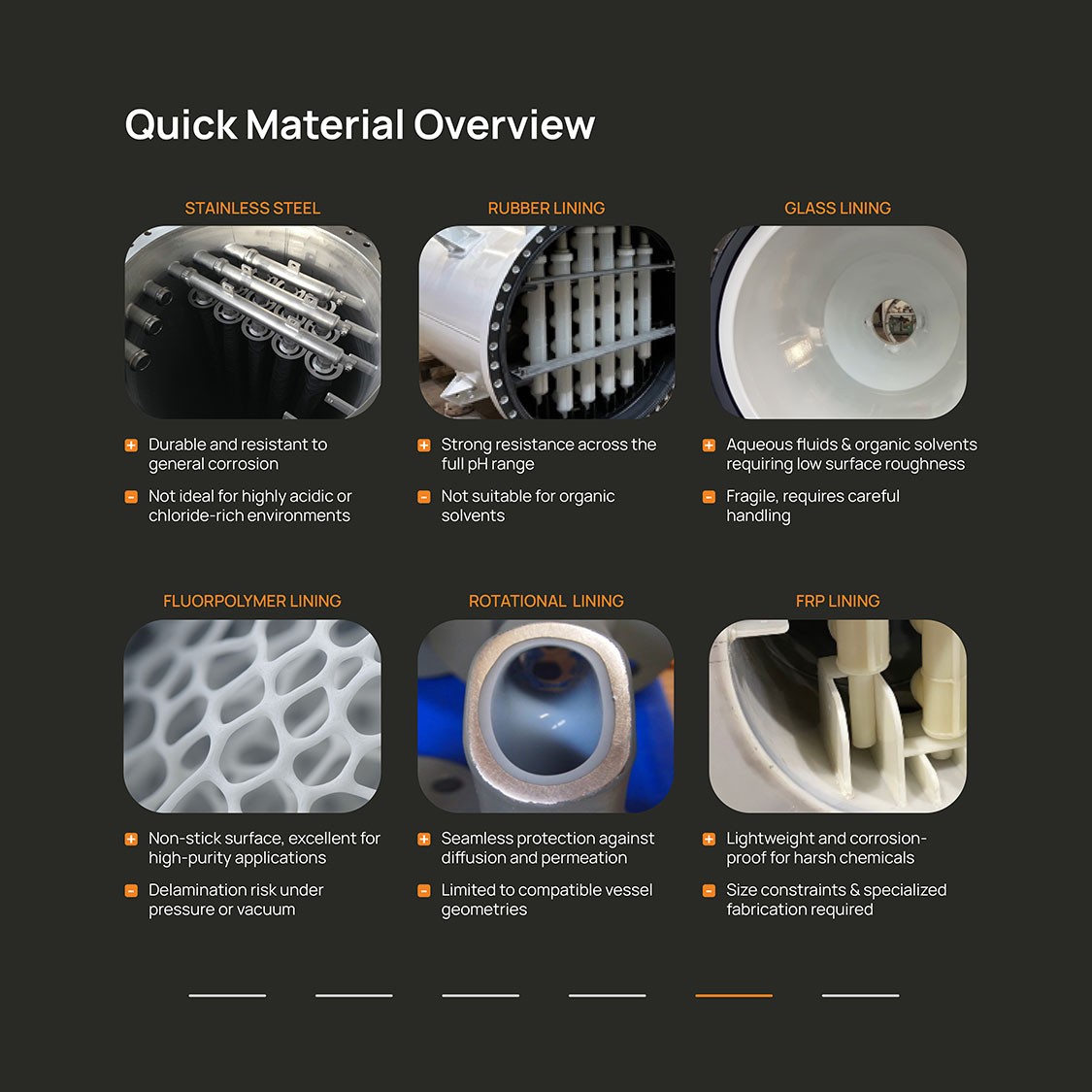
Still, nowadays many applications can be covered with standard stainless steels such as 304 or 316L. For our filters 316L is the material of choice when it comes to applications without complex requirements. However, specialty alloys such as Duplex (2205, 1.4462), Super Duplex, 904L, Hastelloy or Titanium can be a good choice especially for smaller equipment or for industrial sectors where materials other than metals are traditionally not accepted. DrM can provide filter equipment in these materials.
Liners pose an attractive alternative in certain cases
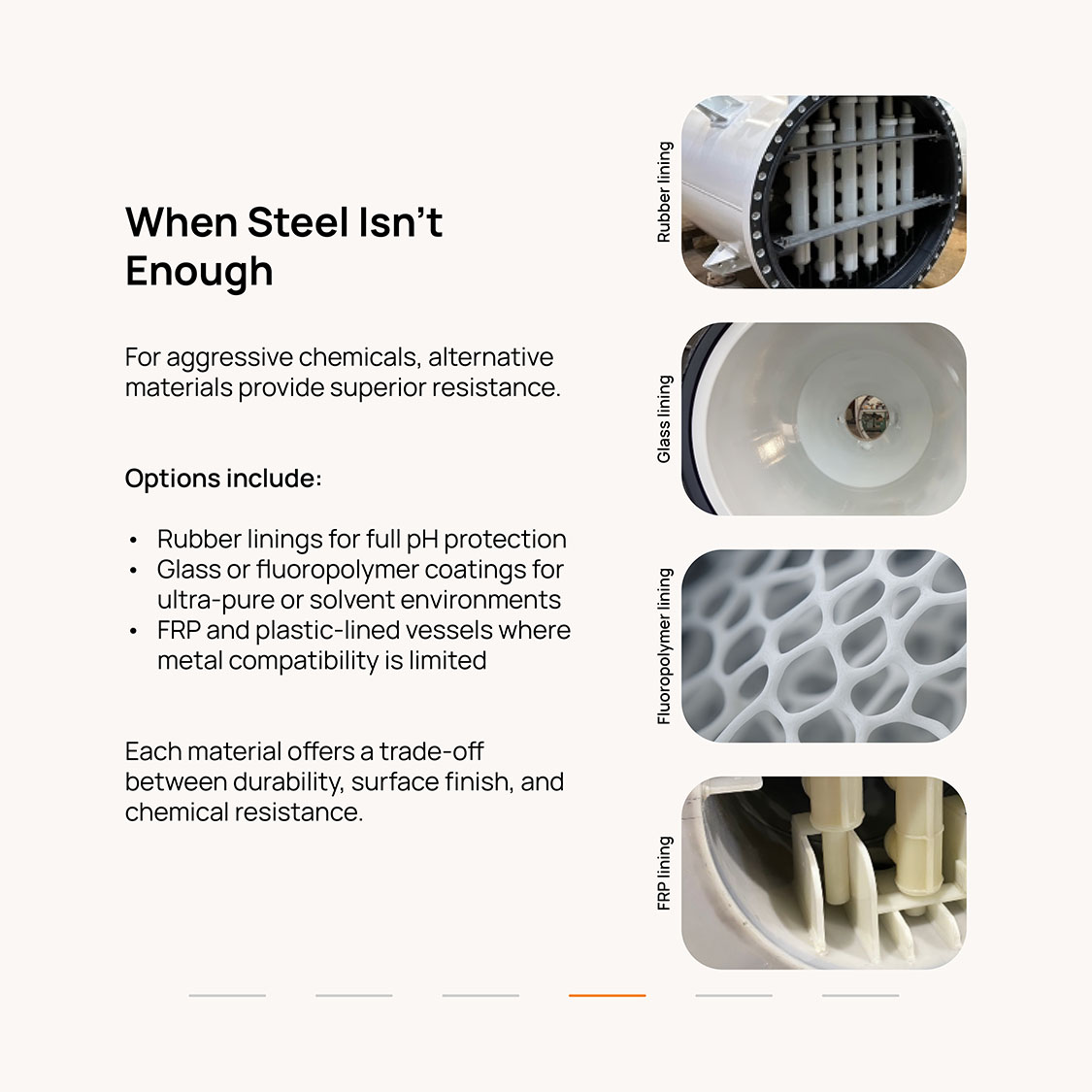
For larger equipment or when chemical attack is more severe decision making becomes more complex. One of the best alternatives today is still rubber lining. It usually covers the complete pH range up to a temperature of approx 100ºC and is robust enough for harsh environments. Adhesion to the steel vessel is excellent, permeation through the lining material is low and repairs can be done on site.
Glass lined vessels are still a viable solution
However, for cases with exposure to aqueous fluids containing organic solvents or with requirements for low surface roughness rubber cannot be applied. In such cases other solutions need to be looked at. Glass lining is a good choice for small to medium sized equipment. It offers great chemical resistance against many liquid mixtures over a wide range of temperatures and has become the material of choice in multi purpose process equipment for a broad range of chemicals. However, it is important to note that both design and handling of the equipment needs special care for proper functioning and to prevent damage of the glass lining with tools and equipment.
Opportunities and risks of fluoropolymer sheet liners
In recent years fluoropolymeric liners have become popular. These include materials such as PTFE, PFA, FEP, ETFE, ECTFE as well es PVDF. Despite their exceptional chemical resistance against most chemicals, these high performance plastics do not come without their issues. When such liners are applied in sheets they need to be glued to the steel. However, these polymers have the tendency to be extremely slippery in nature and hardly anything sticks. To improve adhesion the 3-5 mm thick sheets can be extruded with a textile backing. The sheets are welded together in place and any small pinhole can easily lead to diffusion of chemicals, resulting in corrosion of the steel. With proper workmanship this can be prevented. However, we finally also need to consider the operating conditions. For instance, we noted that as long as the vessel operates at constant pressure and temperature the liner can fulfil its duty. It becomes trickier when cyclic loading is involved such as short filtration times at elevated temperatures and pressures. Due to different thermal expansion coefficients the liner drags along the steel substrate, causing it to delaminate. Furthermore, care needs to be taken in regard to vacuum operation. Although lining companies are able to guarantee exposure to vacuum, it is an additional stress factor influencing life time. It is important to note that a vacuum situation can also happen unintentionally when the filter is kept closed at elevated temperature and then is allowed to cool down.
Rotational lining as state of the art technology
Here the polymer is added into the vessel, which is then heated while being rotated along two axis, causing the polymer to melt and be evenly distributed along the complete inner surface with a thickness of 3-4 mm. Such type of liners requires special vessel constructions as not all of the nozzles can be covered. Due to the complete elimination of seams and a strong adhesion to the steel substrate this is a far superior alternative to sheet liners. As the material is applied in liquid form and needs to cool down on the steel surface cracks during cooling need to be prevented. For this reason the vessel diameter and length is limited. Specifically for PFA with its high thermal expansion coefficient only small pieces can be lined. On the other hand ETFE allows for vessels with larger diameter.
Fluoropolymeric coatings as a viable alternative to liners
ECTFE (Halar) coatings have been on the market for many years. In the meantime their application thickness has been increased to over 1 mm. DrM has made good experience and recommends this proven material for various applications.
Filter design
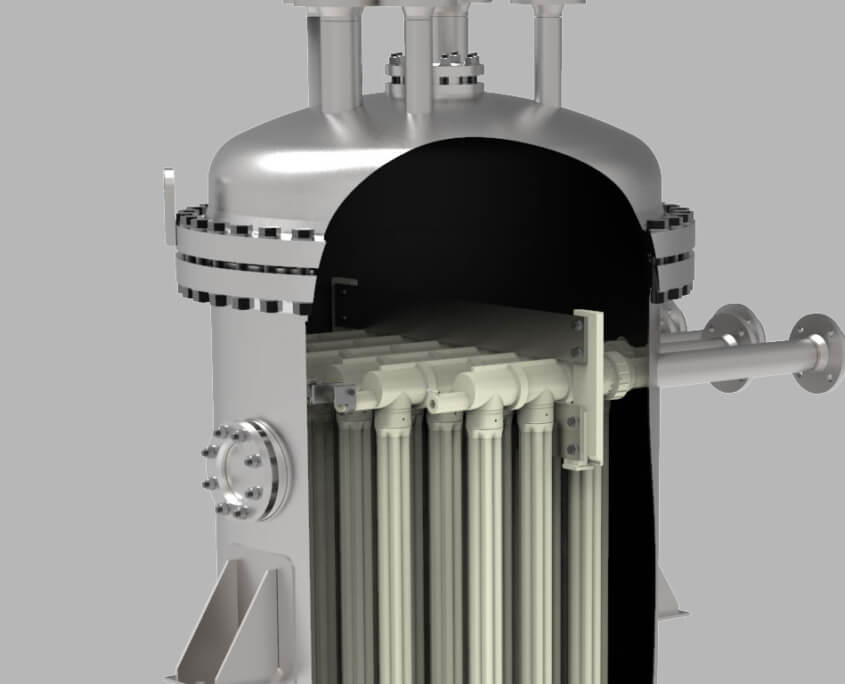
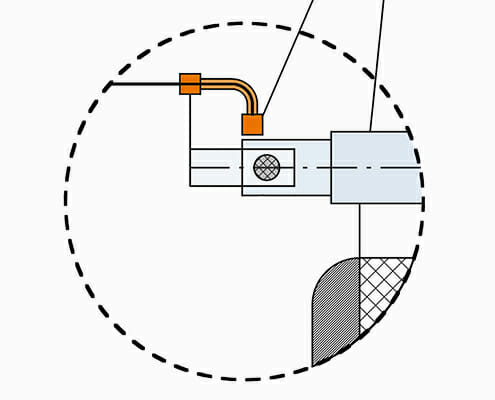
When it comes to linings and coatings the filter design needs to be altered to assure frictionless suspension of internals on the liners. For this DrM developed special insertion pipes which prevent abrasion of the liner when in contact with moving filter internals.
Not all types of liners allow for a filter design with parallel filtrate outlets. In such cases alternative designs are chosen such as top exits.
Lined FRP (fibre reinforced plastics) vessels can be a great choice
In the world of chemical equipment FRP never really established itself as a popular option. There are a number of reasons for this, but as a result it has always been difficult to fulfil certain pressure vessel codes and little know how is available in this regard. However, this has not prevented us from using this material for very specific applications in extremely aggressive environments. An FRP vessel with liner is built from the inside out, meaning that the polymer sheet is rolled up to the right diameter and all nozzles and connections are welded. Then the liner is tested for any pinholes and finally the FRP is wrapped around, creating a very tight fit with great adhesion. The filter size is limited but for certain application it is a great choice.
Filter internals
DrM always offered a wide choice of materials to be applied to internals. Again, 316L has been a very popular material. But also Duplex steels, Titanium and Hastelloy are viable options.
At the same time plastic internals are an important part of our business and they come with a range of choices. Polypropylene, PVDF and PPS serve as workhorse and in most cases they can cover all our needs. Other alternatives are constantly being monitored and tested. Operating temperatures up to 170ºC can be applied with our plastic internals.
Filter Media
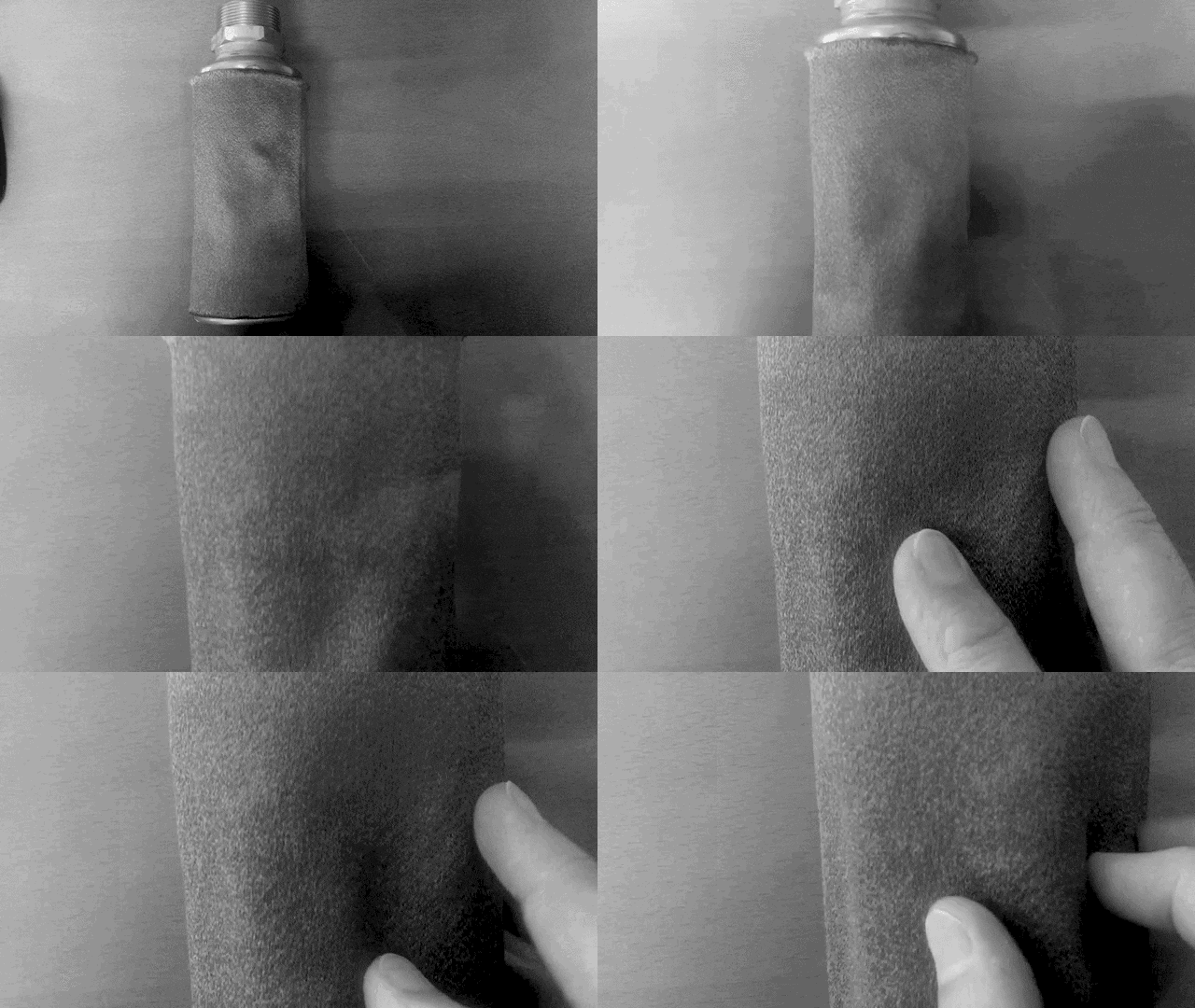
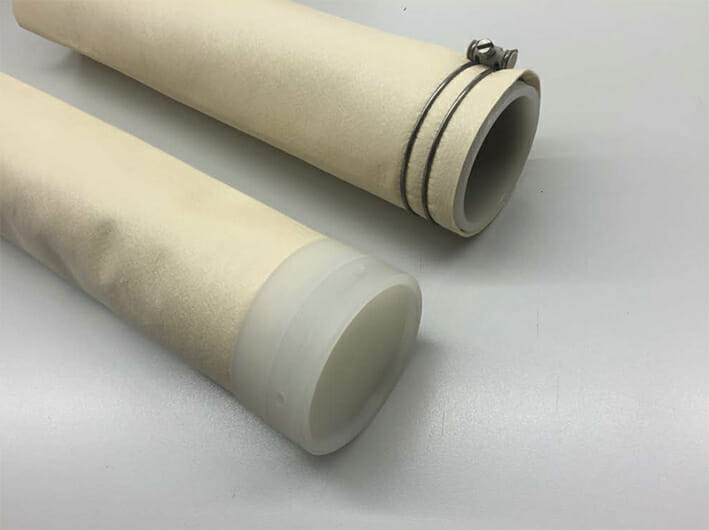
Finally, we can offer a long list of choices for our filter media. Typical polymeric materials are PP, PVDF, PPS, PTFE, Polyester and PEEK. Some of them can be applied up to 240ºC. If even higher temperatures are required we can offer a stainless steel (316L) filter media which can easily reach temperatures up to 400ºC.
Frequently Asked Questions
What factors should be considered when choosing materials for filtration equipment?
Selecting filter materials means balancing cost, flexibility and risk against the mechanical and chemical properties required for a specific application. DrM focuses on materials that provide strong resistance to temperature and chemical attack over the equipment’s service life, while balancing lifetime against cost. The components that typically need to be defined include the filter elements, the registers, insert tubes and clamps, the filter media, the pressure vessel, any lining or coating, and the piping, valves and instruments.
When is 316L stainless steel sufficient, and when are specialty alloys needed?
Standard stainless steels such as 304 or 316L cover many applications, and 316L is DrM’s material of choice for filters without complex requirements. For more demanding duties, for smaller equipment, or for sectors where standard metals are not traditionally accepted, specialty alloys such as Duplex (2205, 1.4462), Super Duplex, 904L, Hastelloy or Titanium can be a better choice, and DrM can supply filter equipment in these materials.
When are rubber and glass linings used in filter vessels?
For larger equipment or more severe chemical attack, rubber lining is one of the best alternatives: it typically covers the full pH range up to around 100°C, adheres well to the steel vessel, has low permeation and can be repaired on site. Where the fluid contains organic solvents or requires low surface roughness, rubber cannot be used; glass lining is then a good choice for small to medium equipment, offering excellent chemical resistance across a wide temperature range, though both its design and handling require special care.
What do fluoropolymer sheet liners, rotational linings and coatings offer?
Rotational lining adds polymer to the vessel, which is heated while rotated on two axes so the polymer melts into a seamless 3-4 mm layer with strong adhesion, making it a superior alternative to sheet liners, though vessel size is limited (PFA suits only small pieces while ETFE allows larger diameters). As a coating option, ECTFE (Halar) has a long, proven track record and can now be applied at over 1 mm thickness. Filter designs are adapted with special insertion pipes so that moving internals do not abrade the liner.
What materials are available for filter internals and filter media?
For internals, 316L is popular, along with Duplex steels, Titanium and Hastelloy, while plastic internals in polypropylene, PVDF and PPS cover most needs and operate up to 170°C. For filter media, polymeric options include PP, PVDF, PPS, PTFE, Polyester and PEEK, some usable up to 240°C, while stainless steel (316L) media can reach up to 400°C. Lined FRP (fibre-reinforced plastics) vessels are also available for specific, extremely aggressive applications.