Electrodeposited copper foil is a material in high demand. Every lithium-ion battery cell, every printed circuit board, and every advanced electronics assembly depends on it. Driven by the expansion of EV production, 5G infrastructure, and grid-scale energy storage, new copper foil manufacturing capacity is being developed not only across Asia but increasingly in Europe and North America. For producers setting up or expanding facilities in these markets, filtration is one of the engineering decisions that has a direct and lasting impact on production performance. At the heart of copper foil production is an electrolytic process that is highly sensitive to contamination, and getting the filtration step right from the start matters considerably more than having to correct it later.
How is copper foil produced, and why does electrolyte purity matter?
Electrodeposited copper foil is produced by dissolving copper in a copper sulfate (CuSO4) electrolyte solution and depositing it onto a rotating drum cathode through electrolysis. The quality of the foil depends directly on the cleanliness of the electrolyte. Suspended particles, organic contaminants, and metallic impurities cause surface defects, uneven deposition, and inconsistent thickness, resulting in foil that does not meet specification for PCB laminates or battery anodes.
During production, copper wires or scrap copper are dissolved in the CuSO4 solution and activated carbon is added to adsorb organic matter. The liquid must then be filtered before it reaches the electrolysis tanks. Without consistent filtration at this stage, the electrolyte degrades over time and foil quality becomes unpredictable. For producers supplying foil to PCB manufacturers or battery gigafactories, an unreliable filtration step is not a minor inconvenience. It is a production risk.

What filtration challenges are specific to copper foil electrolyte processing?
The electrolyte is processed continuously, meaning the filter must operate reliably over extended periods without interrupting production. The particle load includes fine activated carbon and copper fines, both of which can blind conventional filter media quickly. Cartridge filters, widely used in general liquid filtration, face real limitations here. They block rapidly, require frequent replacement, generate significant waste, and each changeout introduces a risk of contamination and a disruption to the filtration circuit. For a facility running continuously, this maintenance burden adds up quickly in both cost and downtime.
How does the FUNDABAC® filter address electrolyte filtration in copper foil production?
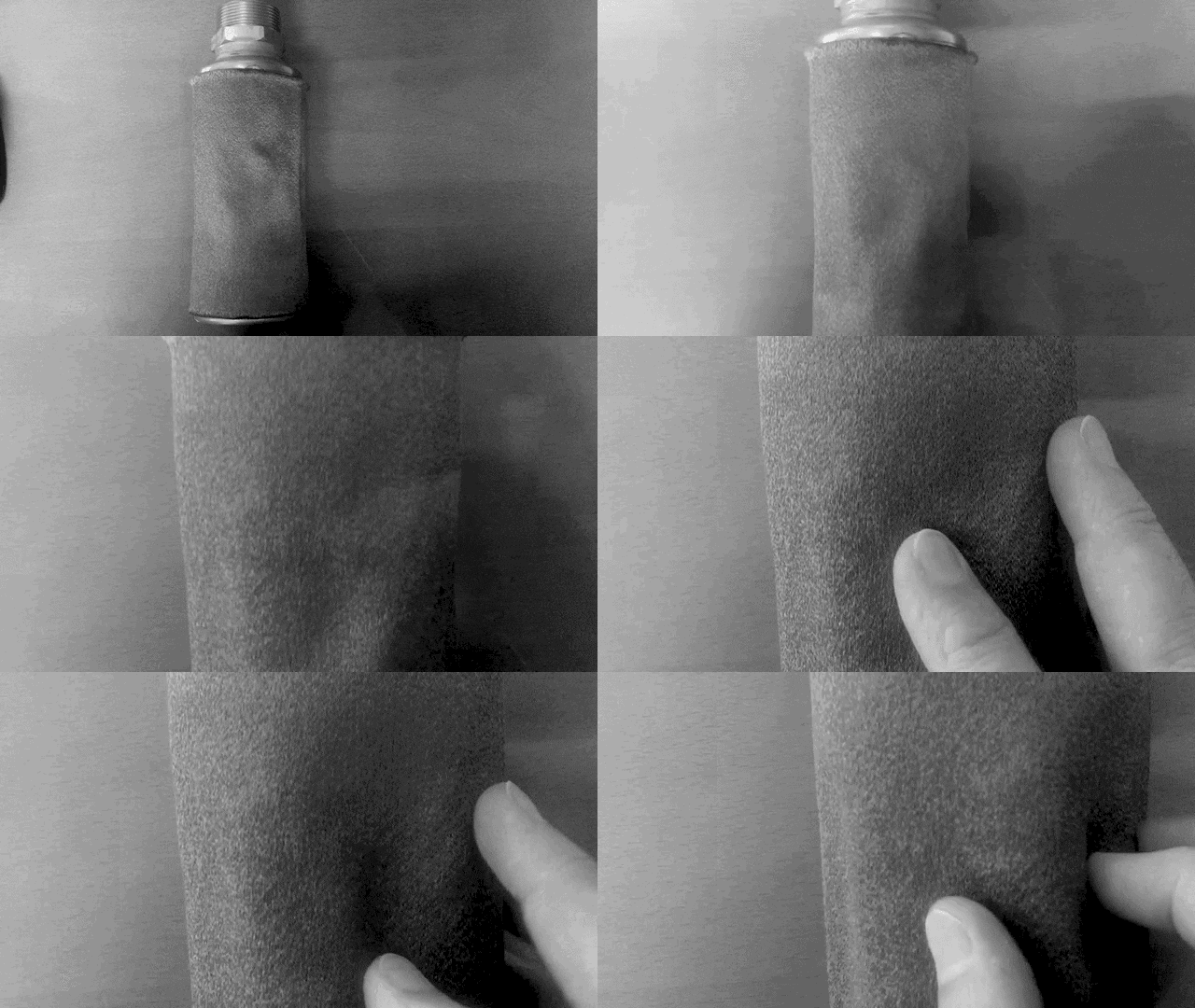
FUNDABAC® candle filters have been used in copper foil electrolyte filtration for many years, with installations across multiple production facilities in Asia. Copper wires or scrap copper are dissolved in CuSO4 solution, activated carbon is added to adsorb organics, and the loaded solution is filtered through a FUNDABAC® filter operating with a filter aid precoat layer. The clarified filtrate is directed to the electrolysis tanks, and the activated carbon and solids are discharged as a dry cake.
The filter aid precoat protects the filter media and enables effective retention of fine activated carbon particles. The automatic back-pressure discharge releases the cake without manual intervention, and the filter media are backwashed during each cycle, maintaining consistent filtration rates over time without media replacement. The fully enclosed design minimises operator exposure to chemically aggressive copper electrolyte solutions, and the absence of moving internal parts keeps maintenance requirements low.
Compared to cartridge-based filtration, the FUNDABAC® system offers several operational advantages: reduced frequency of filter interventions, lower maintenance labour requirements, improved filtrate clarity, and dry cake discharge that reduces the volume and handling requirements for spent activated carbon. These are not marginal gains in a facility processing large electrolyte volumes continuously.


Why is copper foil filtration increasingly relevant today?
Copper foil production has historically been concentrated in a small number of Asian markets, but the industries driving demand, EV batteries and advanced electronics, are expanding globally. New production capacity is coming online across Europe, North America, India, and other parts of Asia as manufacturers work to build more resilient local supply chains and meet growing demand closer to their end markets.
For producers entering this space or scaling up existing operations, getting the filtration step right from the outset has a measurable impact on production efficiency and foil quality. The process chemistry is consistent regardless of where the plant is located, but expectations around automation, reliability, and low maintenance overhead are rising across the industry as facilities are built to increasingly demanding operational standards.
DrM has been supplying filtration systems for copper refining and electrodeposited copper foil production across multiple markets for many years. That accumulated experience across a wide range of facility sizes and process configurations provides a practical foundation for addressing the filtration challenges that producers face as the industry scales.