Efficient Lithium Battery Recycling
The global demand for Lithium Batteries (LiBs) is rapidly increasing due to the electric vehicle, energy storage and portable electronics markets. The waste created by end of life and scrap batteries poses a growing environmental challenge. Therefore, battery recycling is becoming mandatory in many states and nations. LiBs are hazardous to humans and the environment when not disposed off appropriately. In Europe, the EU Battery Directive dictates that producers must recycle or transfer recycling responsibility to third party, while in California, recycling is mandatory.

Recycling Technology
LiBs contain valuable raw materials such as nickel, manganese, cobalt and lithium. In contrast to energy-intensive pyrometallurgical recovery circuits, in direct recycling processes the individual battery parts are first shredded, then the material is sieved, allowing to extract the “black mass“.
Depending on the refining process applied the „black mass“ is suspended in a water/electrolyte mixture which needs to be filtered in order to obtain the valuable components and recycle the liquid fraction. The washed and dried cake is fed to a downstream leaching step for further processing.

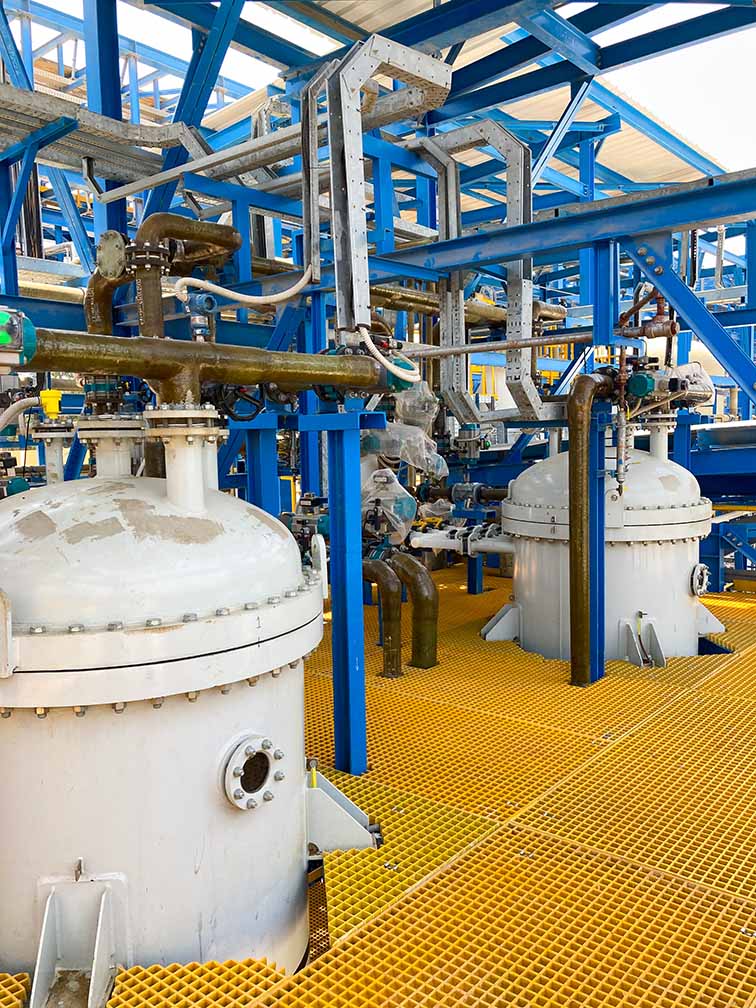
Pilot test with a FUNDABAC® Filter have been performed to separate the black mass from the hazardous electrolyte mixture. The filter is particularly well suited thanks to its entirely closed design and the fully automatic operation.
Key criteria for selection of the filtration system:
- Entirely closed design suitable for safe handling of the hazardous products
- Properly washed cake with low TOC content
- Low residual moisture of the discharged cake
- Clear filtrate (free of solids)
FUNDABAC® filters have been proven to be the ideal equipment for satisfying these criteria. Furthermore, the use of dynamic filter cloths renders the need for moving or rotating parts completely unnecessary. As a result, capital investment and spare parts cost are reduced considerably. As a matter of fact, only the filtration media, which is made of synthetic fibres has to be replaced after months or even years of operation, depending on type and use.


.
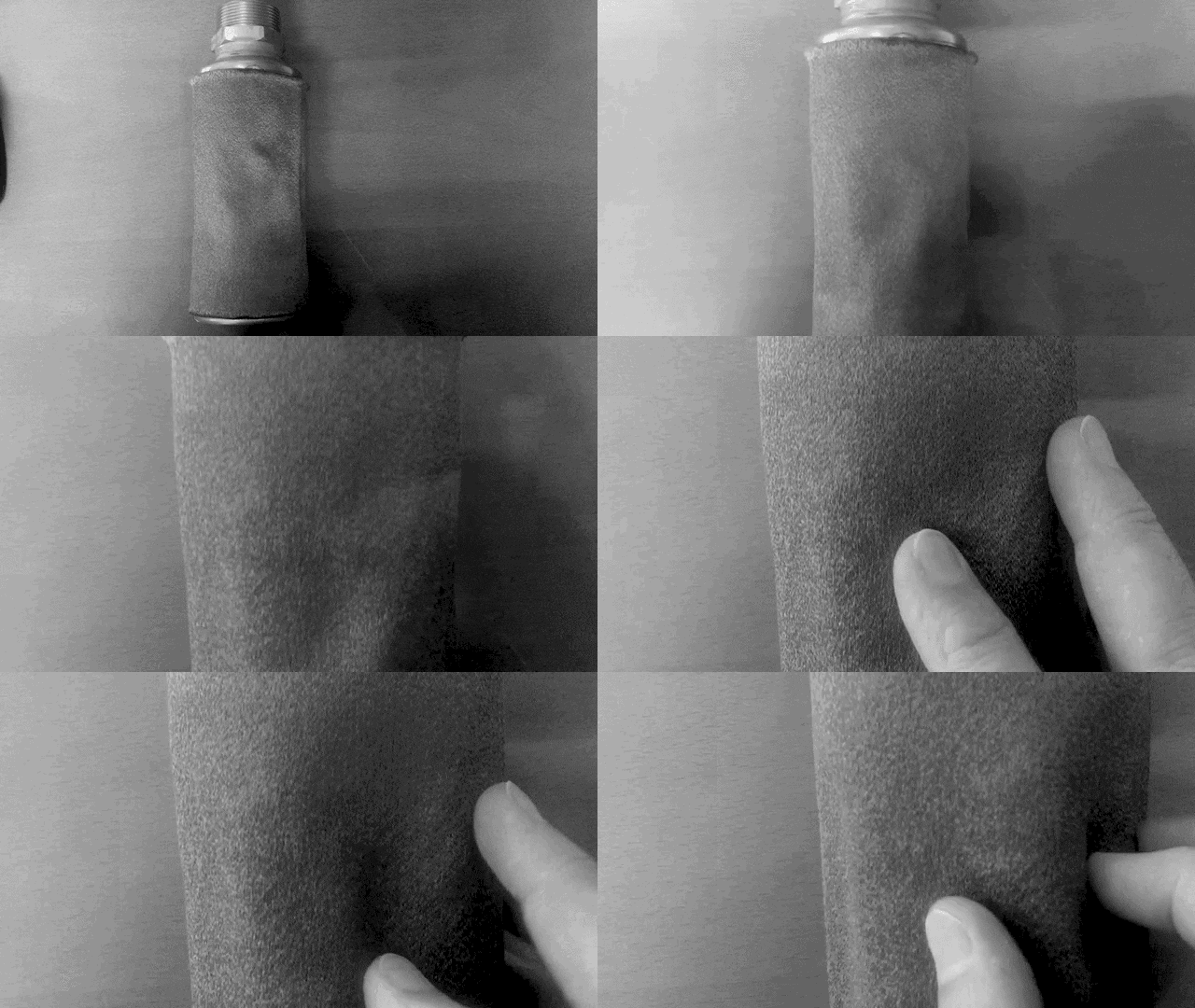
„Black Mass“ filter cake collected during pilot testing.
Frequently Asked Questions
Why is lithium battery recycling becoming mandatory?
Global demand for lithium batteries (LiBs) is rising rapidly due to electric vehicles, energy storage and portable electronics, and end-of-life and scrap batteries pose a growing environmental challenge. LiBs are hazardous to people and the environment if not disposed of appropriately, so recycling is becoming mandatory in many regions: the EU Battery Directive requires producers to recycle or transfer that responsibility to a third party, and in California recycling is mandatory.
What is “black mass” in battery recycling?
Black mass is the valuable material fraction extracted from spent lithium batteries. In direct recycling, the battery parts are first shredded and then sieved to extract the black mass, which contains valuable raw materials such as nickel, manganese, cobalt and lithium. Depending on the refining process, the black mass is suspended in a water/electrolyte mixture that must be filtered to recover the valuable components and recycle the liquid fraction.
How does the FUNDABAC® filter separate black mass from the electrolyte?
Pilot tests with a FUNDABAC® filter have separated black mass from the hazardous electrolyte mixture. The filter is well suited thanks to its entirely closed design and fully automatic operation, producing a properly washed cake with low TOC content, low residual moisture in the discharged cake, and a clear, solids-free filtrate. The washed and dried cake is then fed to a downstream leaching step for further processing.
What are the key criteria for selecting a filtration system for battery recycling?
The key selection criteria are an entirely closed design suitable for safe handling of the hazardous products, a properly washed cake with low TOC content, low residual moisture of the discharged cake, and a clear filtrate free of solids. FUNDABAC® filters have been proven to satisfy all of these criteria.
What maintenance advantages does the FUNDABAC® filter offer for recycling operations?
Because the FUNDABAC® uses dynamic filter cloths, it needs no moving or rotating parts, which considerably reduces capital investment and spare-parts costs. In practice only the filtration media, made of synthetic fibres, needs replacing, after months or even years of operation depending on the type and use.