Catalyst recovery filtration is the solid-liquid separation step that follows a catalytic reaction, and in fine chemical and speciality chemical production, as well as in pharmaceutical and petrochemical manufacturing, it carries more weight than a simple clarification duty. The catalyst is often the most valuable material in the vessel, the liquid phase is frequently flammable or toxic, and the solids themselves may be pyrophoric. Equipment selected on filtration area alone can meet the clarity target and still return the catalyst in a condition that cannot be reused, regenerated, or economically reclaimed.
What makes catalyst recovery different from ordinary clarification?
Catalyst duty imposes five requirements at the same time, and few filter types satisfy all of them. The system must be closed, because catalysts such as Raney nickel and palladium or platinum on carbon are pyrophoric, and many reaction solvents are flammable or toxic. The catalyst must be recoverable from the same process unit that performed the filtration, either as a slurry or as a damp-dry solid, without transfer to a second vessel. The cake must be washable before discharge, so that mother liquor is displaced and neither dissolved product nor catalyst value leaves with the spent solids. The filter media must form a cake without precoat or body feed, since filter aid mixes with the recovered catalyst and complicates reclamation. Corrosion resistance has to be delivered across a wide range of chemistries, which is addressed through polymer filter elements and cloths combined with a vessel material selected for the duty.
How do catalyst particle characteristics affect filter selection?
Particle size and slurry behavior determine filter selection more reliably than the catalyst name does. A catalyst recovery slurry filter has to hold very fine solids out of the filtrate while still building a cake that releases cleanly at the end of the cycle. Filtrate clarity is usually the binding specification in catalyst filtration, because catalyst carried downstream affects product purity, increases fouling risk, and adds a polishing step. Residual solids below 3 ppm are achievable in catalyst duty, including in organic liquid phases, with the level reached depending on the catalyst, the support, and the liquid. Particle size also changes over the life of the catalyst, because pump churning and mechanical attrition make the solids finer with each recovery cycle. Fine and compressible cakes are the harder case, which is why representative slurry testing rather than the catalyst specification is the basis for sizing.
How much liquid can be removed from the catalyst cake before discharge?
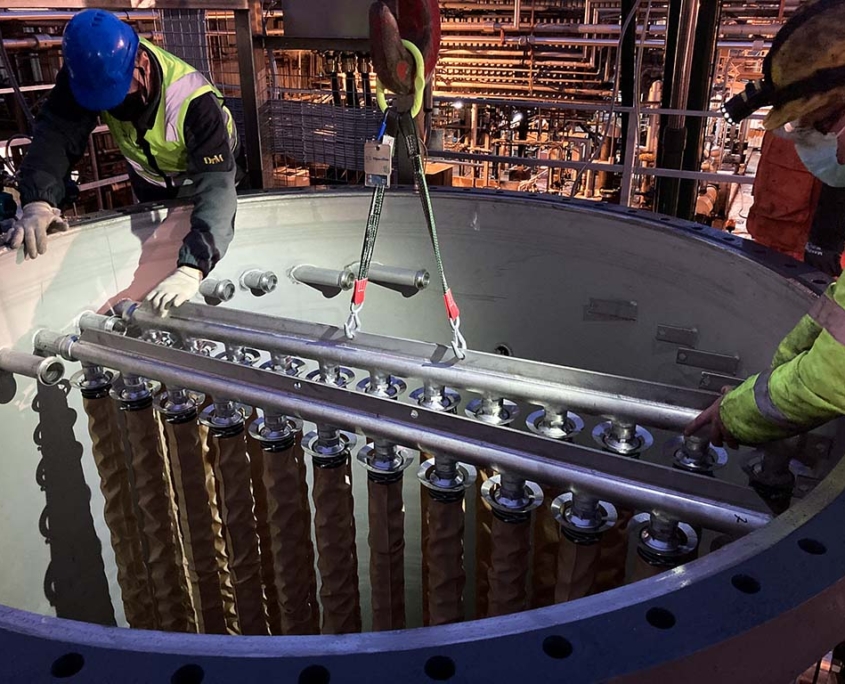
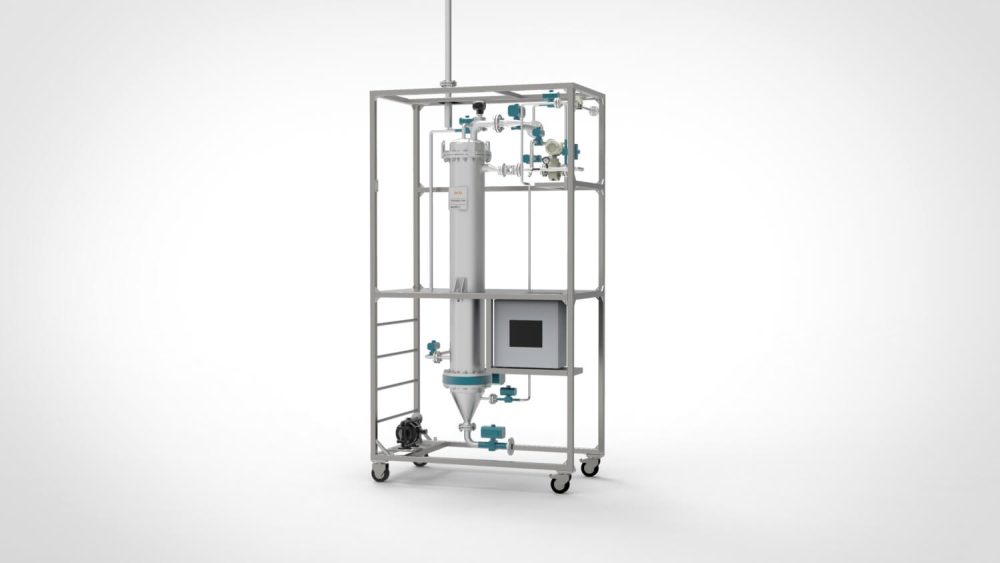
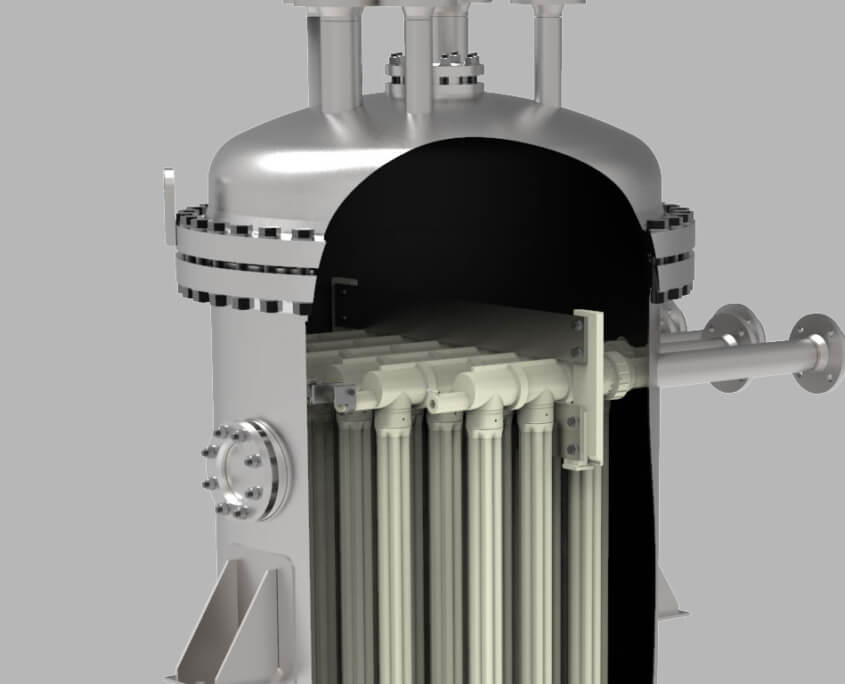
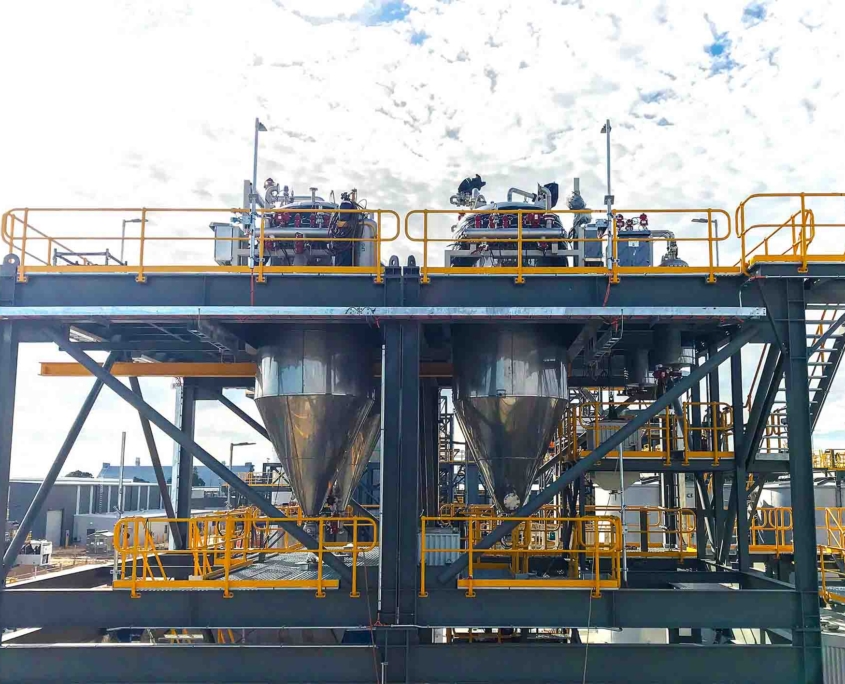
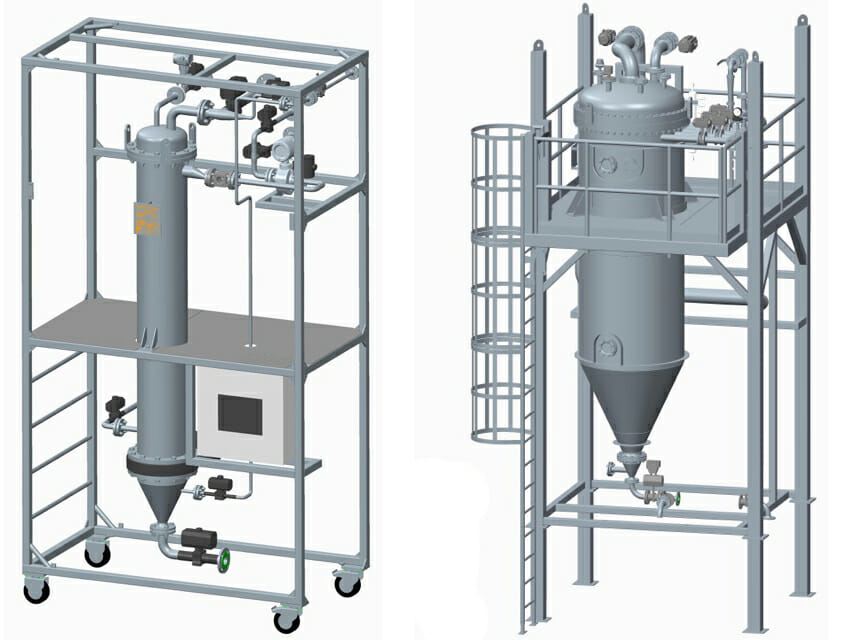
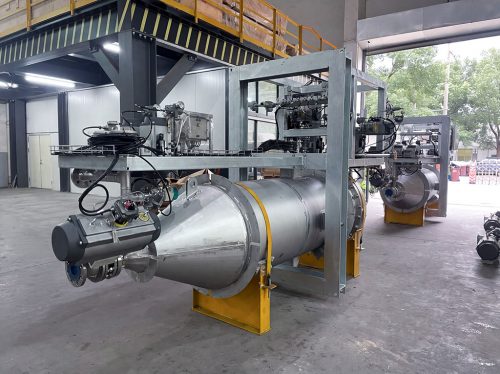
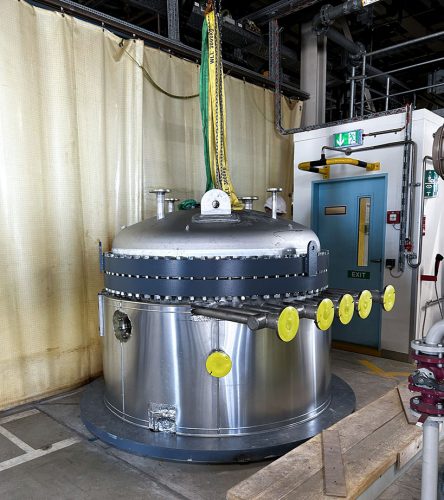
Cake dryness and wash efficiency set the economics of the recovery step. The retained cake holds mother liquor containing dissolved product, and liquid left in the cake is both lost yield and contamination carried into the next step. The FUNDABAC® candle filter applies wash liquid through spray nozzles at the top of the vessel rather than by flooding and displacing the full liquid volume, which reduces wash liquid consumption, removes the need for a wash liquid buffer tank, and shortens the cycle. Heel volume filtration then removes the residual liquid heel below the candles by recirculating it and using pressurized gas as the driving force, preserving batch integrity and reducing waste volume.
Cake is discharged by gas blow-back, and the endpoint is set by the recovery route rather than by the equipment limit. Solids content can reach 70 to 80 percent where a dry cake is wanted. Precious metal catalysts leaving the site are typically held as a wet cake at 40 to 50 percent moisture instead, because over-drying pyrophoric solids creates a transport hazard. Controlling the endpoint therefore matters more than reaching the driest possible cake.
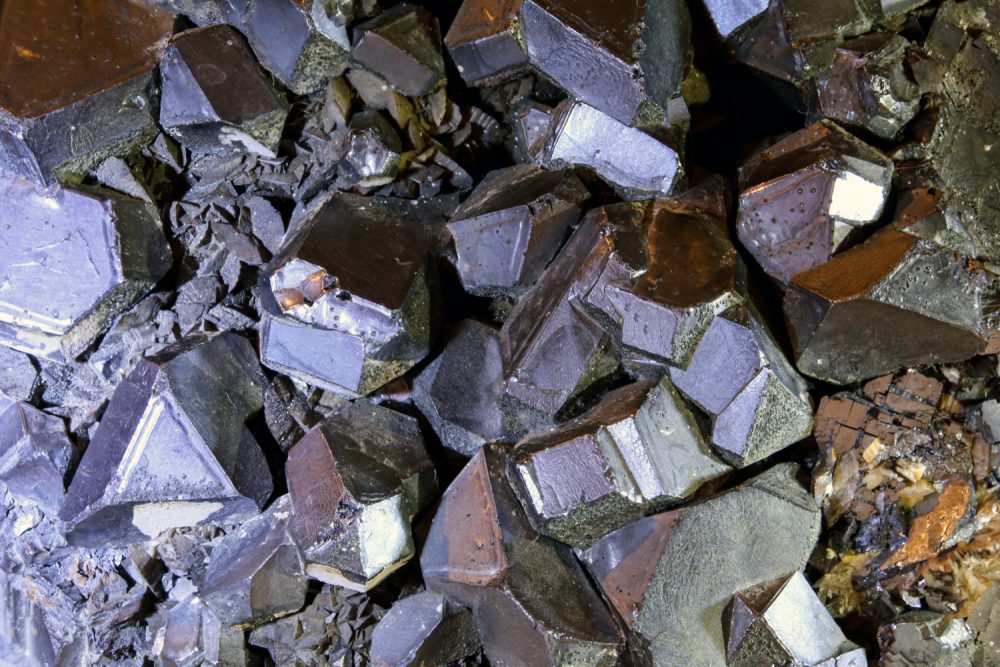
The route follows the catalyst. Raney nickel is normally reused in place until its activity drops and then discarded, since transport of pyrophoric solids is risky and its value does not justify off-site handling. Palladium and platinum on carbon are worth sending for regeneration or reclamation, which makes controlled cake moisture and complete mother liquor displacement the governing requirements.
How is containment achieved with pyrophoric and precious metal catalysts?
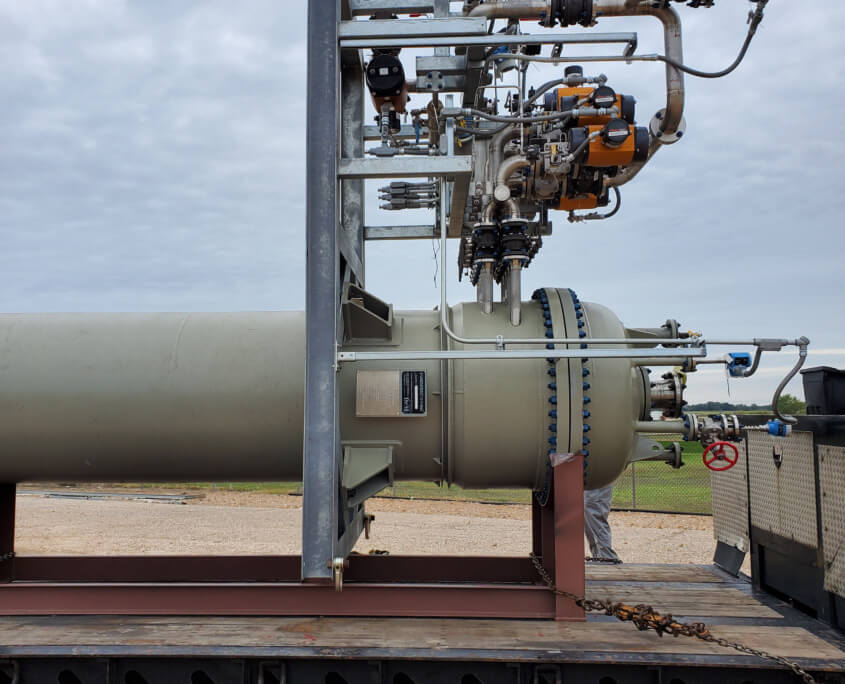
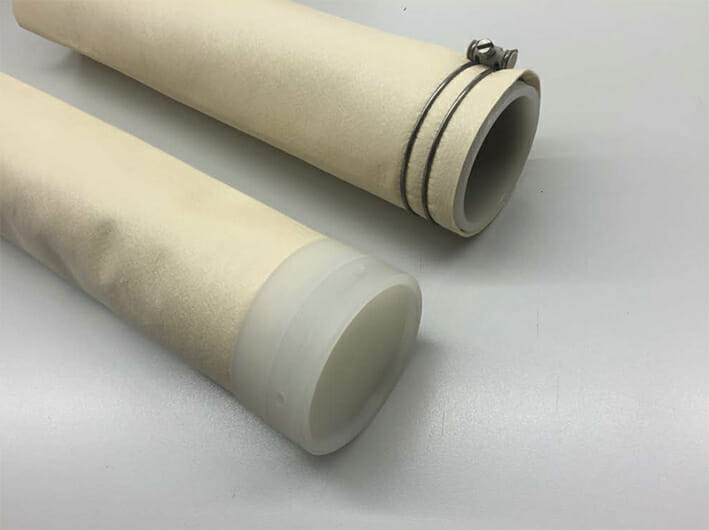
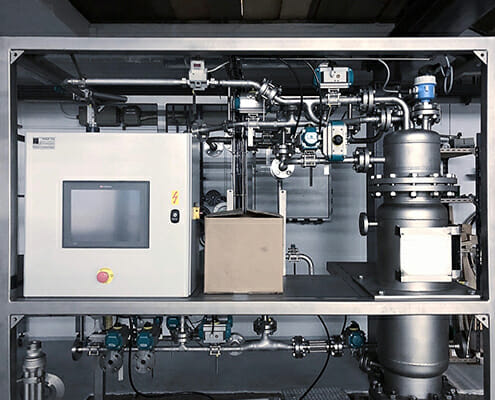
Containment in catalyst duty depends on eliminating moving parts inside the vessel rather than on adding enclosure around a conventional filter. The FUNDABAC® design operates without rotating elements, so the pressure vessel stays genuinely closed through filtration, washing, drying, and discharge, and pyrophoric solids remain isolated from air. Filter elements and cloths are constructed in polymers including PVDF, PTFE, PEEK, and PPS, with the vessel specified separately in a lined or alloy material suited to the process chemistry. Standard designs operate to 180 °C, with special designs to 350 °C, and sanitary configurations with CIP and SIP support GMP compliance where a precious metal catalyst filtration system sits inside an API process. A worked example of this duty is documented in the FUNDABAC® catalyst separation project in fragrance manufacturing.
When is continuous catalyst recycle preferable to batch recovery?
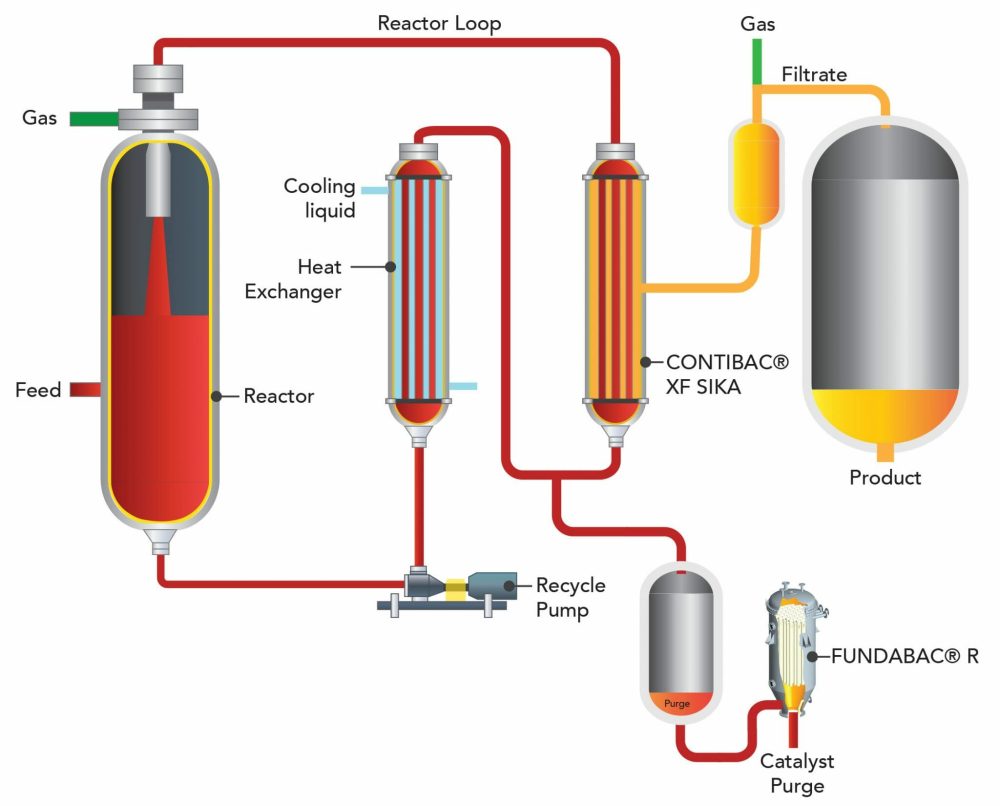
Continuous recycle becomes preferable when the reactor operates as a slurry bed at steady throughput rather than in discrete batches. In heterogeneous slurry hydrogenation, the objective is not to recover the full catalyst charge at the end of a campaign but to keep active catalyst circulating while a purge stream is removed. The CONTIBAC® semi-continuous candle filter serves this duty, discharging recovered catalyst as a slurry for direct return to the process, and is applied where solids loading is consistent and uninterrupted operation matters. The FUNDABAC® candle filter covers batch duty with dry cake discharge and remains the right approach for campaign manufacturing, variable batch sizes, frequent product changeovers, and processes where the catalyst charge is recovered at the end of a discrete reaction step. The right catalyst recovery filter depends on the duty.
Which parameters should be defined before specifying a catalyst recovery filter?
- Catalyst material, support type, and particle size range
- Solids concentration and slurry viscosity
- Required filtrate clarity, stated as residual solids
- Product and solvent recovery target from the cake
- Cake washing requirement and available wash liquid
- Target cake moisture or solids content at discharge
- Operating temperature, pressure, and solvent compatibility
- Flammability, pyrophoricity, reactivity, and exposure risks
- Batch or continuous production requirement
- Reuse, regeneration, or external reclamation route
- Cleaning, containment, and automation requirements
Where does catalyst recovery filtration selection start?
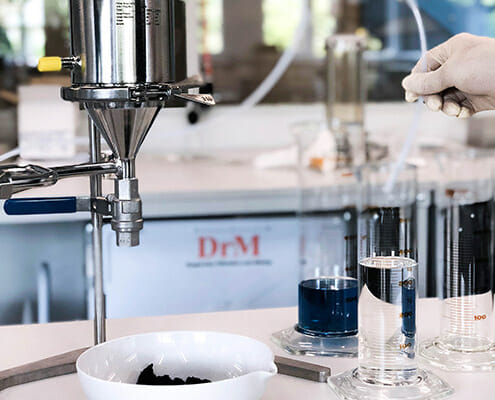
Achievable filtrate clarity, cake dryness, and wash performance can only be established on the actual reaction slurry, which is why representative trials precede sizing rather than confirming it afterward. Testing runs from bench units of 0.012 m2 through pilot scale to industrial systems of up to 300 m2, on the same operating principles at every stage. DrM has supplied more than 550 catalyst filtration units across 40 countries. The installed base covers precious metal catalysts on carbon and other supports, Raney nickel, copper on silicates, and FCC and zeolite systems.
Key takeaways
- Catalyst recovery filtration must combine closed operation, cake washing, and same-unit discharge in one vessel.
- Cake discharge endpoint is a process parameter, from 70 to 80 percent solids down to a controlled wet cake.
- Precious metal catalysts are held at 40 to 50 percent moisture, because over-drying pyrophoric solids is a transport hazard.
- DrM has supplied more than 550 catalyst filtration units across 40 countries.
- CONTIBAC® handles steady-throughput catalyst duty with slurry discharge; FUNDABAC® handles batch duty with dry cake.
Frequently Asked Questions
What is catalyst recovery filtration?
Catalyst recovery filtration is the solid-liquid separation step that follows a catalytic reaction, recovering the catalyst from the reaction slurry so it can be reused, regenerated, or reclaimed. In fine chemical, pharmaceutical, and petrochemical production it carries more weight than a simple clarification duty, because the catalyst is often the most valuable material in the vessel, the liquid phase is frequently flammable or toxic, and the solids themselves may be pyrophoric.
What filtrate clarity is achievable when filtering catalyst slurries?
Residual solids below 3 ppm are achievable in catalyst duty, including in organic liquid phases, with the level reached depending on the catalyst, the support, and the liquid. Filtrate clarity is usually the binding specification in catalyst filtration, because catalyst carried downstream affects product purity, increases fouling risk, and adds a polishing step.
Why is filter aid avoided in catalyst recovery?
The filter media must form a cake without precoat or body feed, because filter aid mixes with the recovered catalyst and complicates reclamation. The filter therefore has to hold very fine solids out of the filtrate while still building a cake that releases cleanly at the end of the cycle, without the assistance of a filter aid.
Can Raney nickel be recovered and reused?
Raney nickel is normally reused in place until its activity drops and is then discarded, because transporting pyrophoric solids is risky and its value does not justify off-site handling. This differs from palladium and platinum on carbon, which are worth sending for regeneration or reclamation and therefore require controlled cake moisture and complete mother liquor displacement.
Why are precious metal catalysts discharged as a wet cake rather than dried?
Precious metal catalysts leaving the site are typically held as a wet cake at 40 to 50 percent moisture, because over-drying pyrophoric solids creates a transport hazard. Where a dry cake is wanted instead, solids content can reach 70 to 80 percent. Controlling the discharge endpoint matters more than reaching the driest possible cake.
What is heel volume filtration and why does it matter?
Heel volume filtration removes the residual liquid heel below the candles by recirculating it and using pressurized gas as the driving force. It preserves batch integrity and reduces waste volume, because liquid left in the vessel holds dissolved product and would otherwise be lost yield or contamination carried into the next process step.
What operating temperatures can catalyst recovery filters handle?
Standard designs operate to 180 °C, with special designs to 350 °C. Filter elements and cloths are constructed in polymers including PVDF, PTFE, PEEK, and PPS, with the vessel specified separately in a lined or alloy material suited to the process chemistry, and sanitary configurations with CIP and SIP support GMP compliance.